TRAnsverse nears 3,000 commercial tug jobs as Svitzer design demonstrates operational strengths
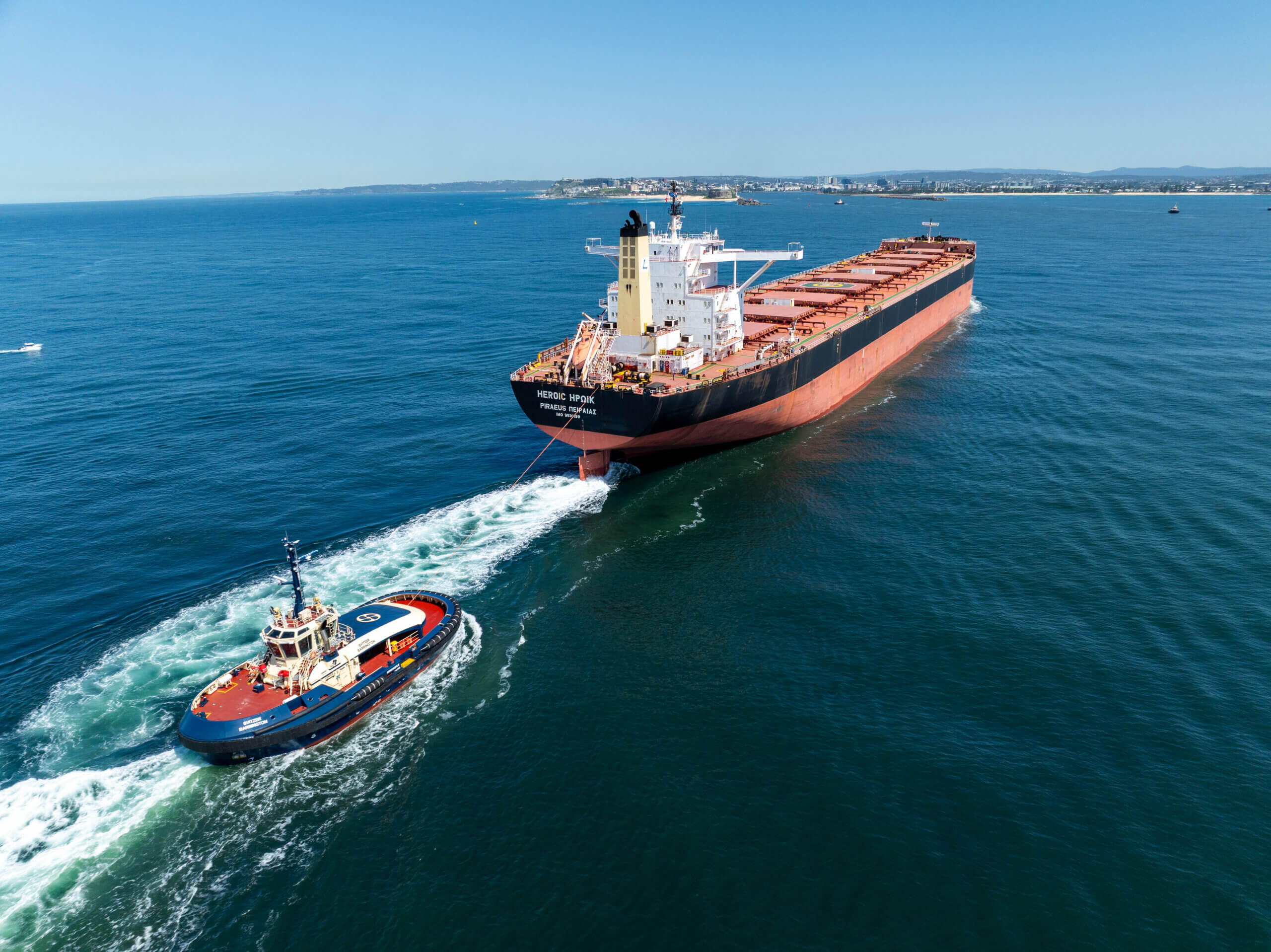
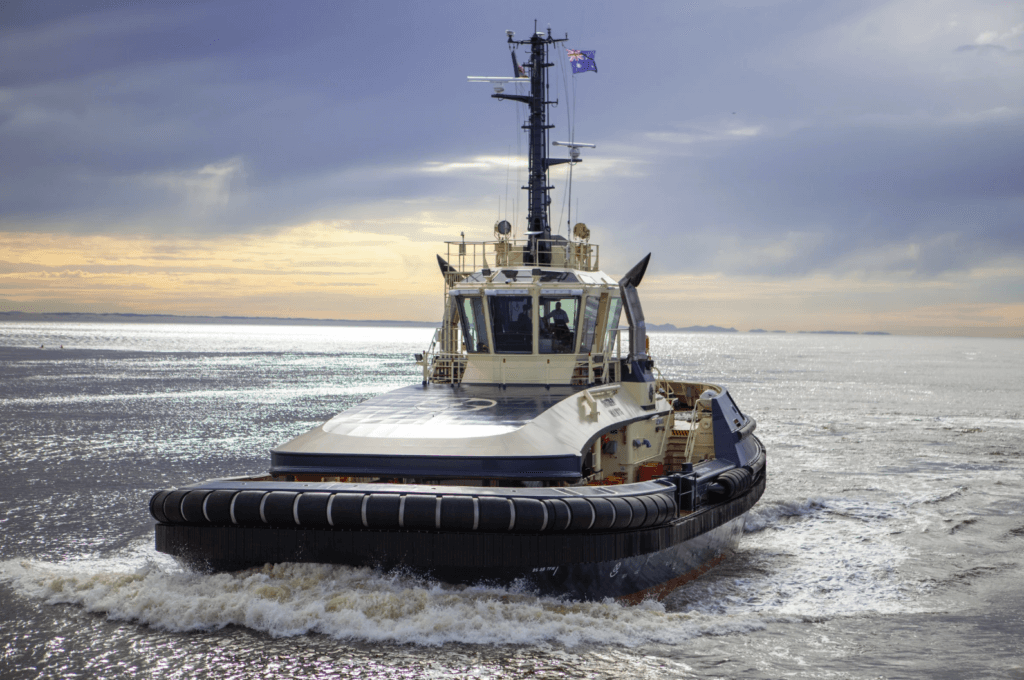
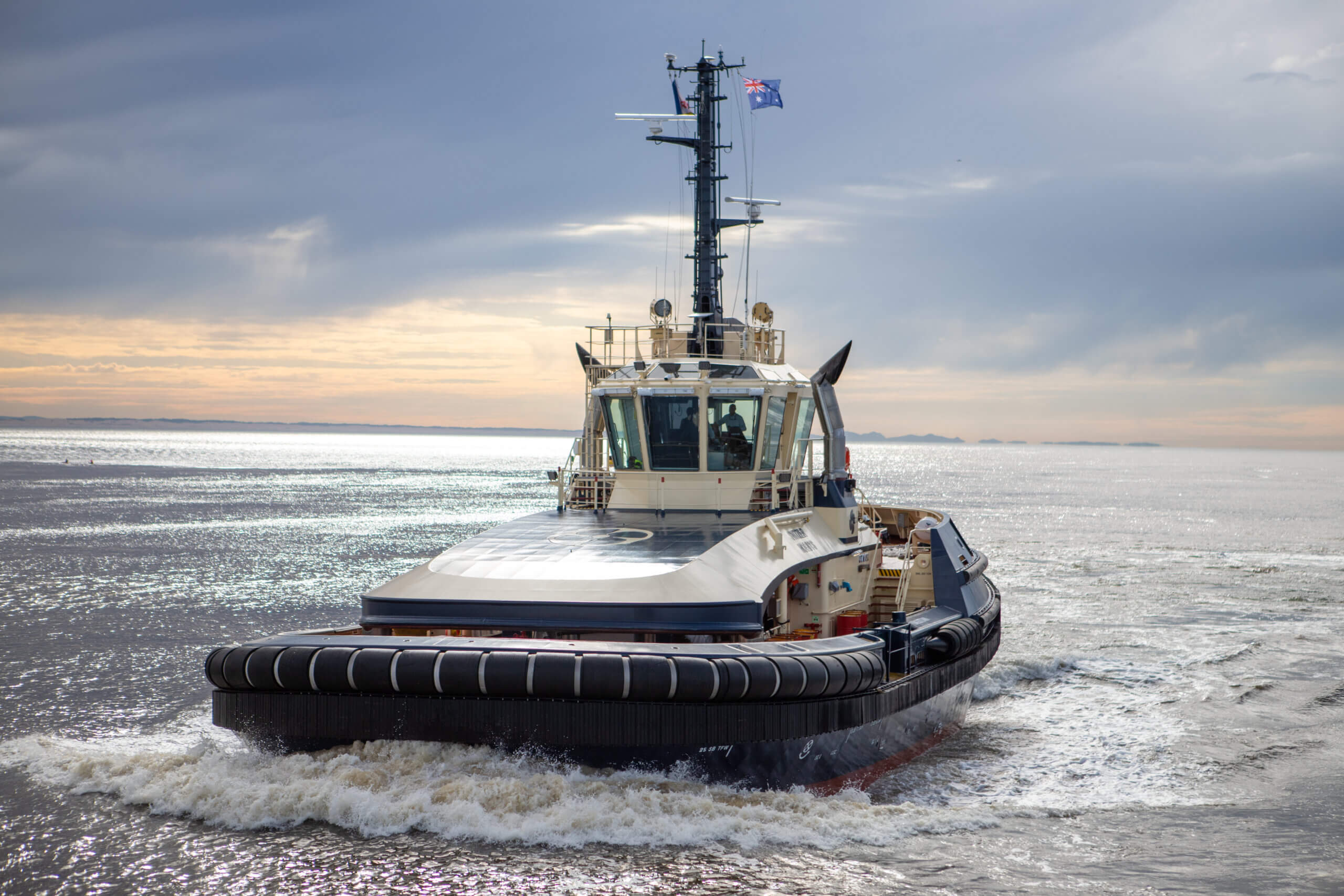
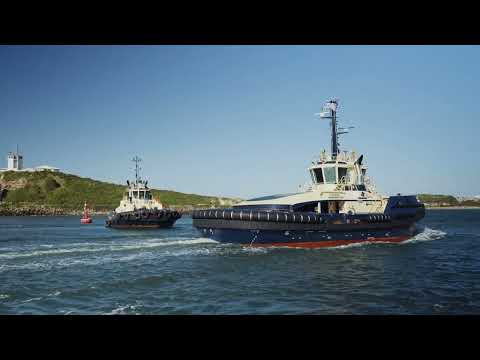
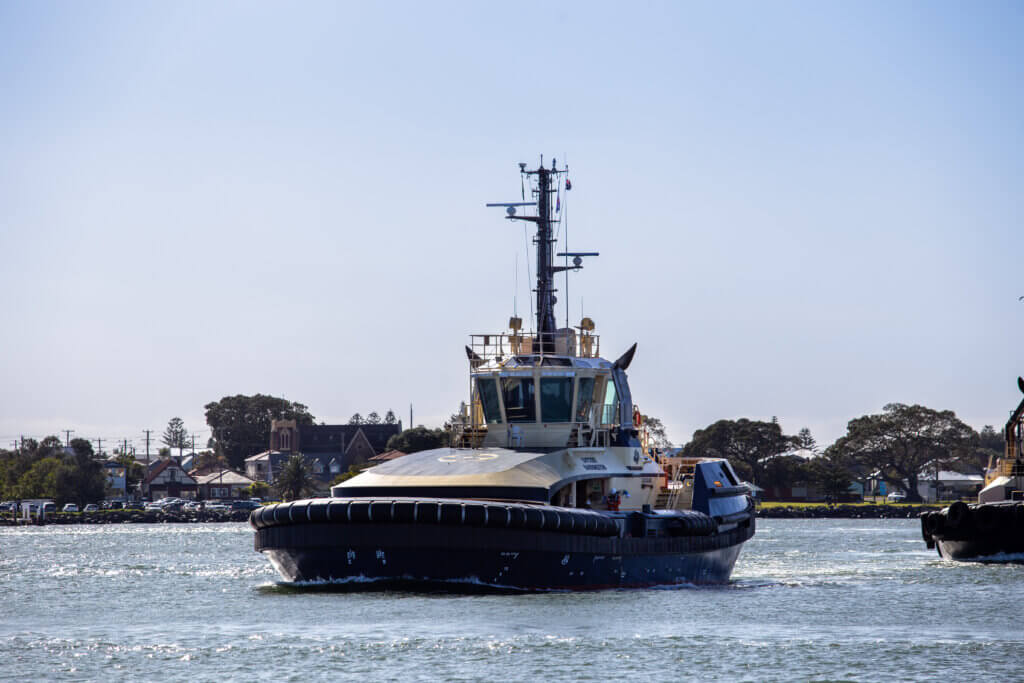
Copenhagen, 15 April 2026: Svitzer’s three TRAnsverse class tugboats are approaching 3,000 collective commercial tug jobs this month, with on-water operations showing superior escort capability, manoeuvrability, and responsiveness.
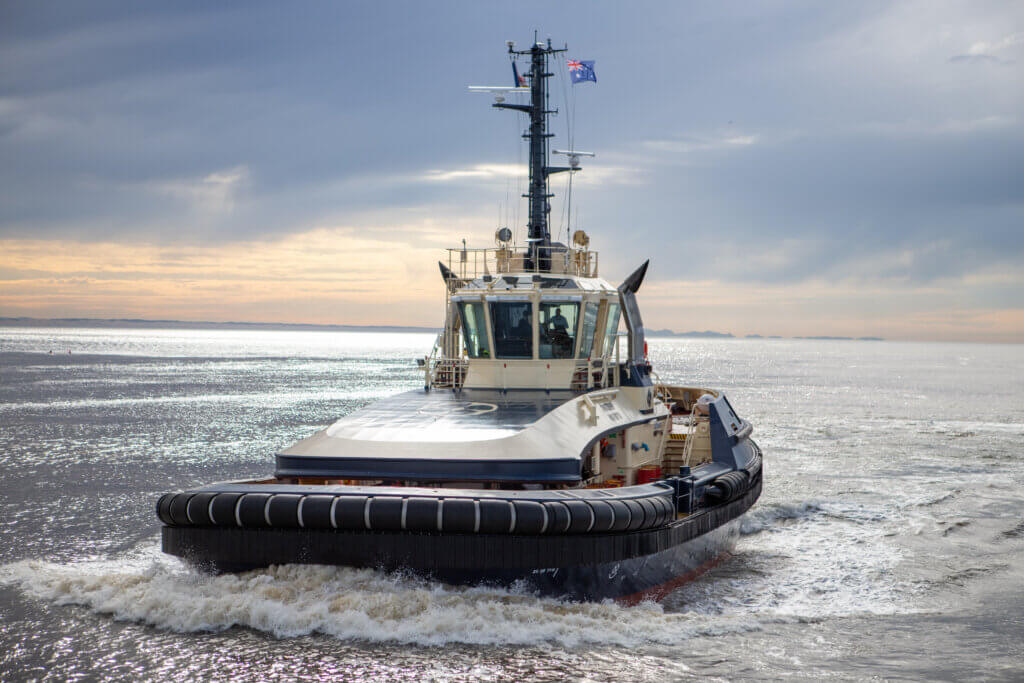
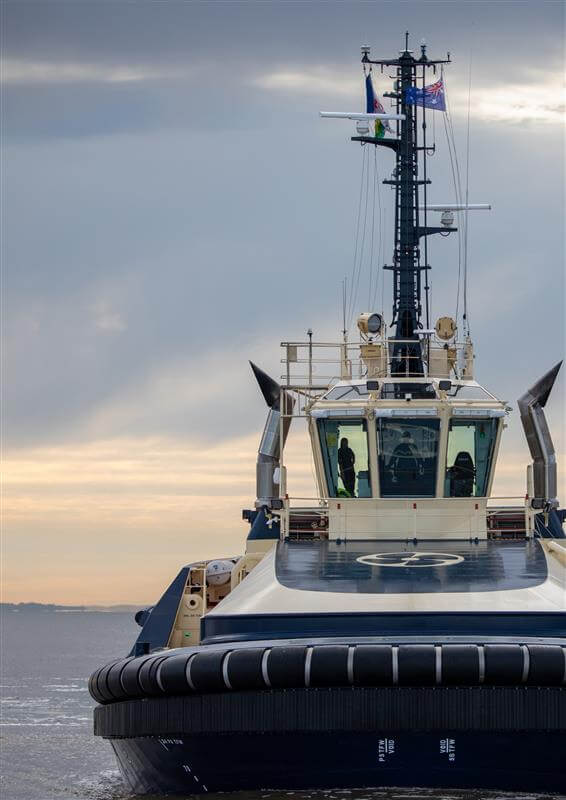
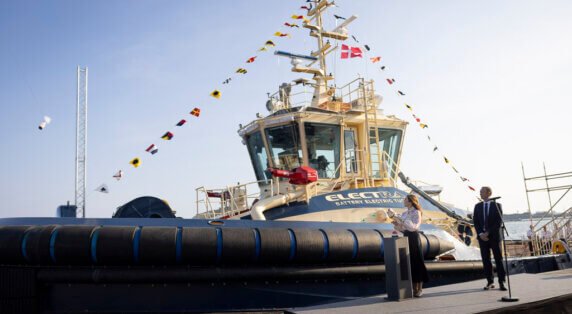
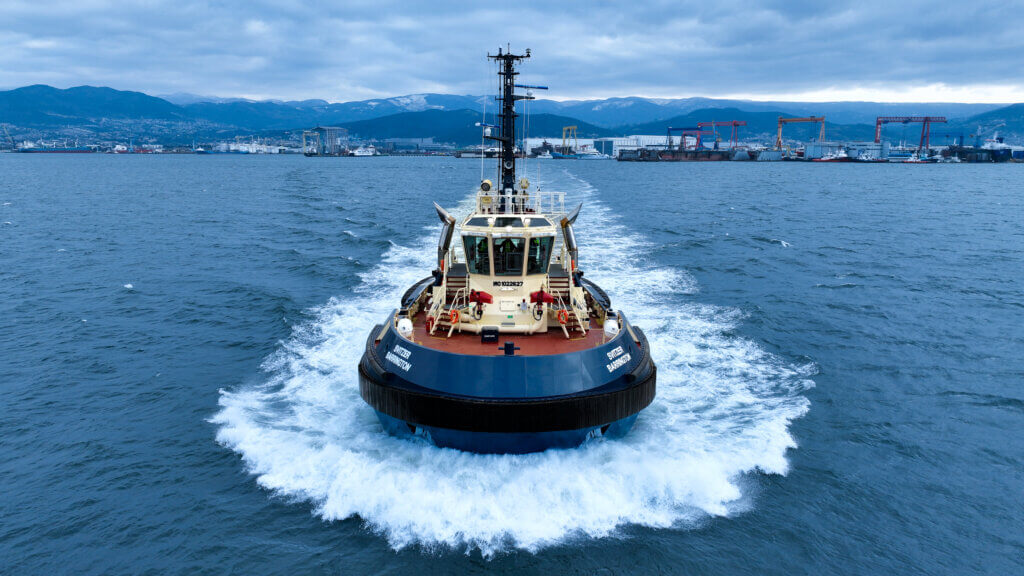
The milestone comes as Svitzer’s fourth TRAnsverse tug, the 35-metre Svitzer Balder, demonstrates early performance in sea trials underway in Turkey.
Svitzer Chief Operating Officer, Kasper Karlsen, said the TRAnsverse tug is impressing in a variety of operational contexts.
“That we are nearing 3,000 tug jobs in an 18-month period and able to demonstrate performance in both the confined waterways and locks of IJumiden, Amsterdam and the largest export coal port of the world in Newcastle, Australia, shows just what the vessel is capable of,” Mr Karlsen said.
“Shipping lines are investing significantly in more dynamic, efficient, and larger vessels, as well as optimising their port calls. In this environment, towage sits at a critical interface, and the TRAnsverse tug allows ports and terminals to maximise vessel capabilities and capacity within traditional infrastructure limits,” Mr Karlsen said.
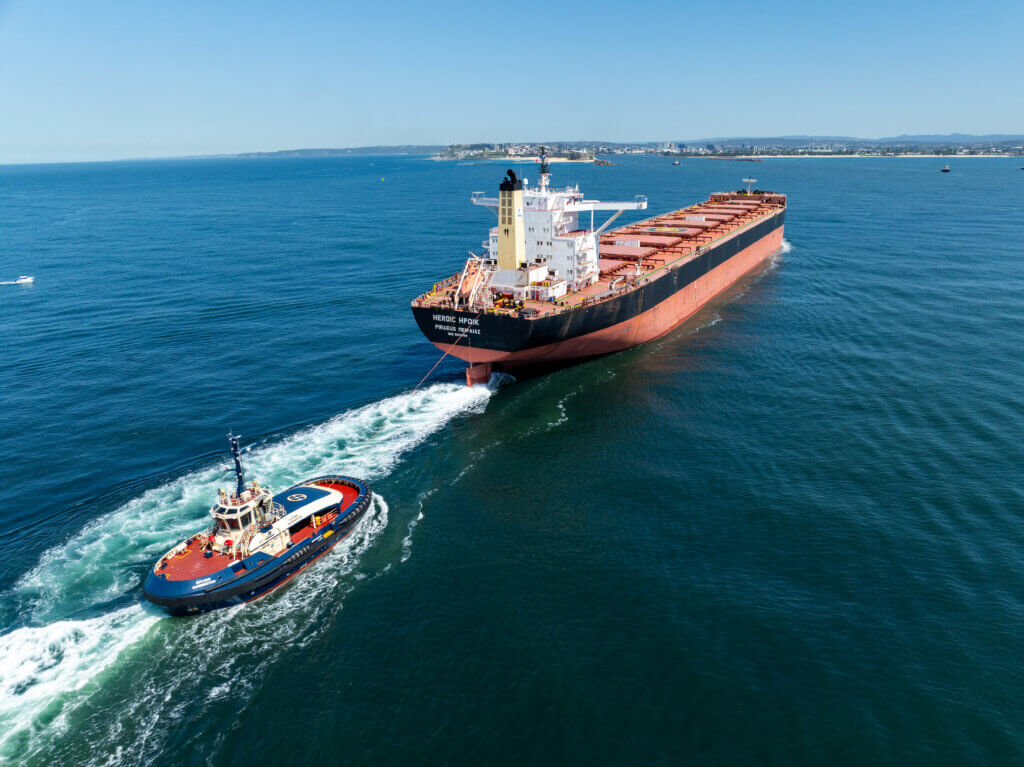
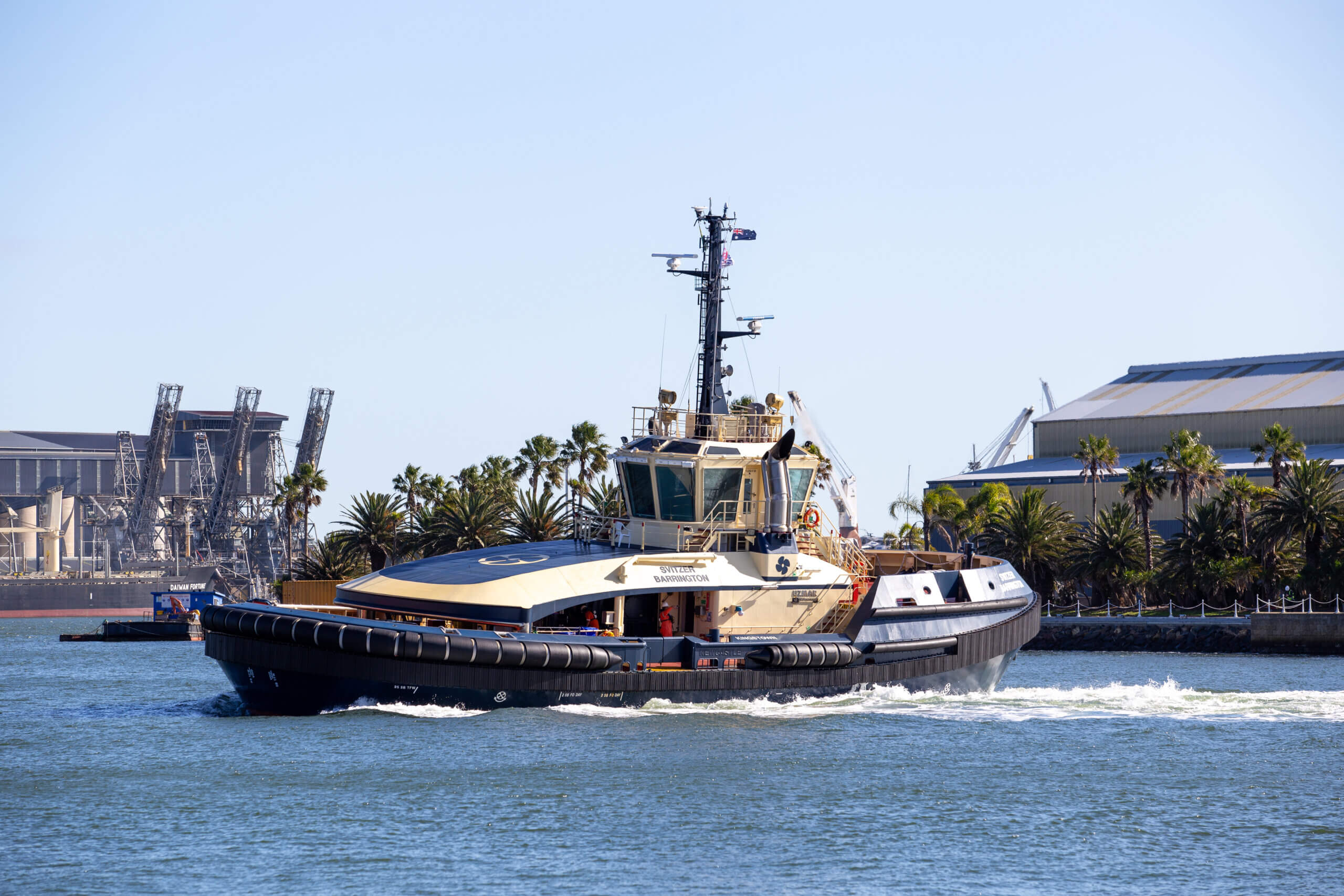
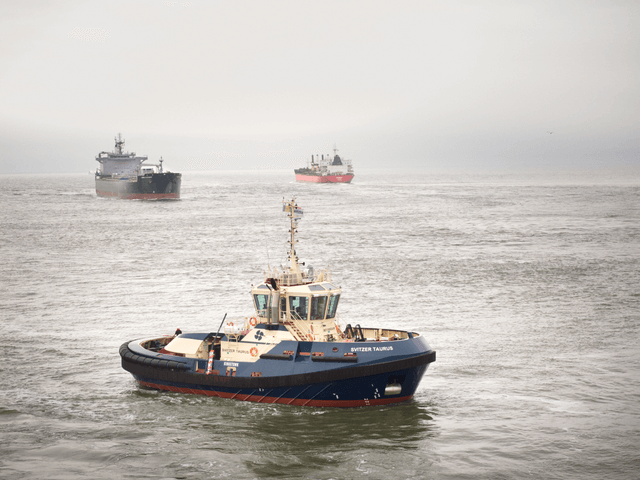
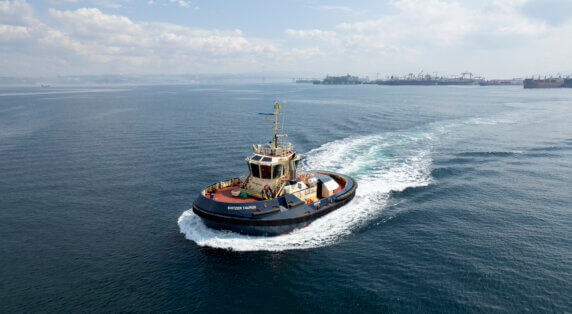
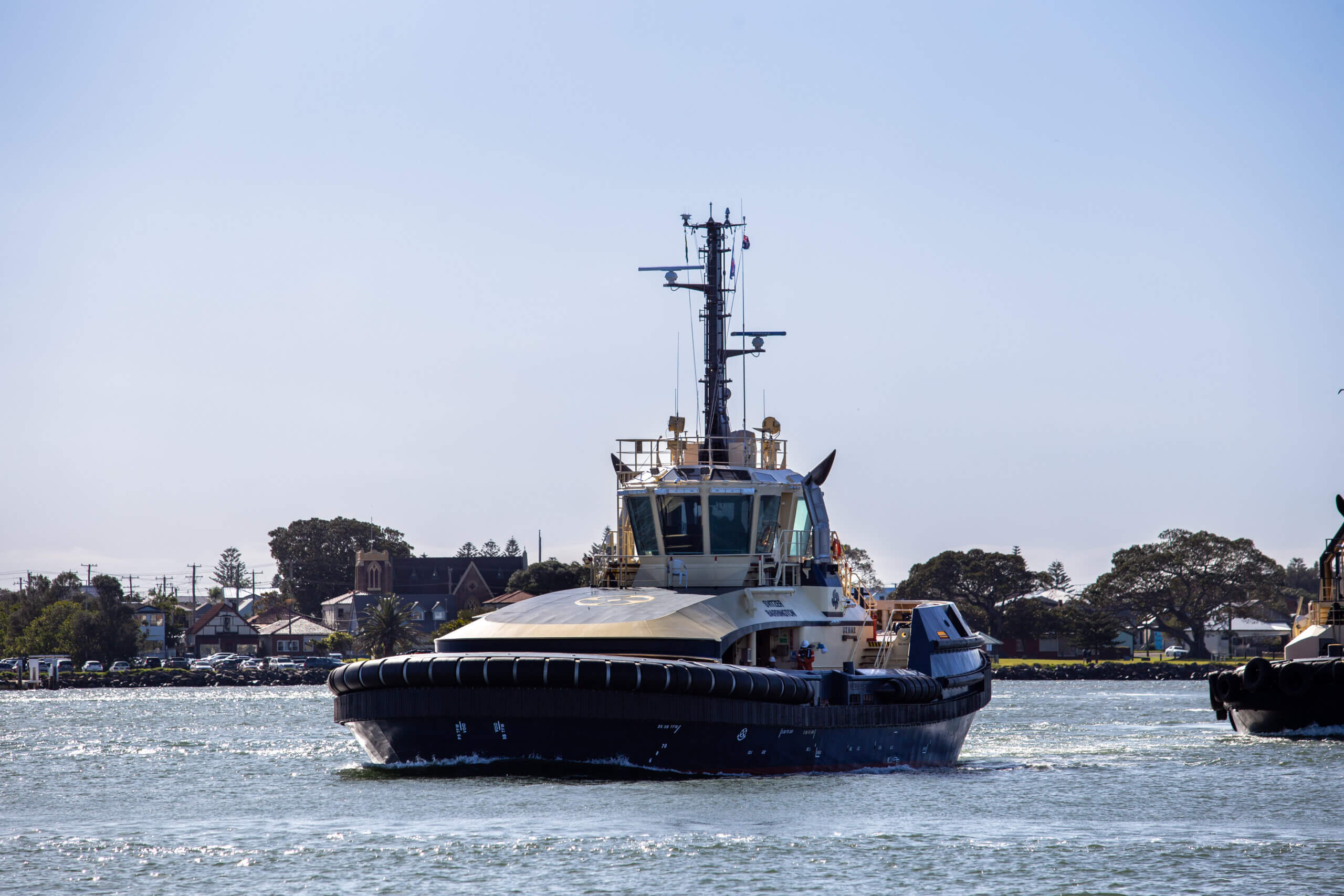
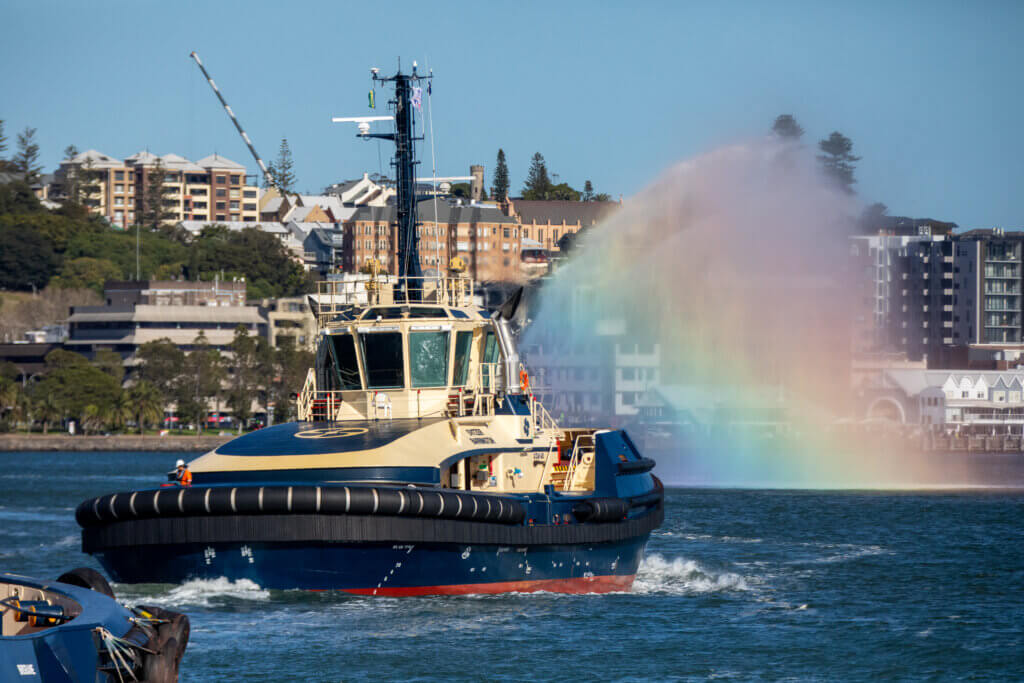
As of 31 March 2026, 26m Svitzer Taurus and 32m Svitzer Barrington and Svitzer Nobbys had completed a collective 2,898 tug jobs in Amsterdam and Newcastle respectively.
“In both locations, the vessels also compete with challenging weather, sea states, and large vessel classes. Most pleasing has been the feedback from Pilots highlighting the TRAnsverse tug’s superior responsiveness, escort capabilities, and manoeuvrability in these conditions,” said Mr Karlsen.
“It is driving a rethink of how towage – and in particular the TRAnsverse tug – is a valuable enabler for ports and terminals and unlocks investment made landside, quayside and by shipping lines in supply chain efficiency and decarbonisation.”
Mr Karlsen said the encouraging early sea trial performance of Svitzer Balder added to the growing set of operational proof to the TRAnsverse design.
Svitzer Balder will be the world’s largest electric escort tug, operating out of Gothenburg, Sweden. The vessel recorded 88 tonne of bollard pull and more than 150 tonnes of steering force in sea trials with Uzmar Shipyard last week. Sea trials continue.
Mr Karlsen said Svitzer’s forward new build program reflects confidence in the TRAnsverse tug design and interest from customers.
More than three quarters of Svitzer’s current 20 plus tug order book are TRAnsverse tugs, in size variations of 26m, 29m, 32m and 35m; and electric, hybrid and conventional diesel-powered configurations.
Vessel details
Svitzer Taurus
TRAnsverse 2600 (26m) Port of operation: Port of IJumiden, Amsterdam, The Netherlands
A1 Escort Tug 62 tonne bollard pull IMO Tier III 1714 tug jobs as of 31 March 2026
Svitzer Barrington and Svitzer Nobbys TRAnsverse 3200 (32m) Port of operation: Port of Newcastle, NSW, Australia 80+ tonne bollard pull A1 Escort tugs IMO Tier III
Svitzer Barrington – 569 TJs
Svitzer Nobbys – 615 TJs
(tug jobs as of 31 March 2026)
Port of Melbourne, Svitzer, CIP and Plexar Energy to Explore Australia’s First Fully Electric Towage Operations
18 March 2026, Melbourne, Australia
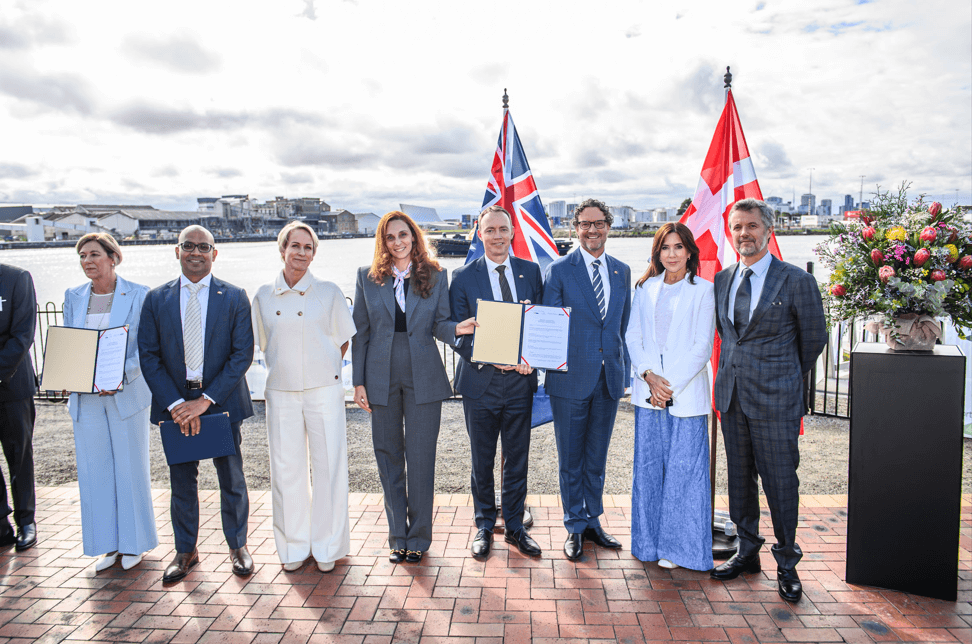
Port of Melbourne and global towage operator Svitzer have signed a Memorandum of Understanding (MoU) to explore the deployment of next‑generation electric tugboats and the clean‑energy infrastructure required to operate them in Australia’s largest container port.
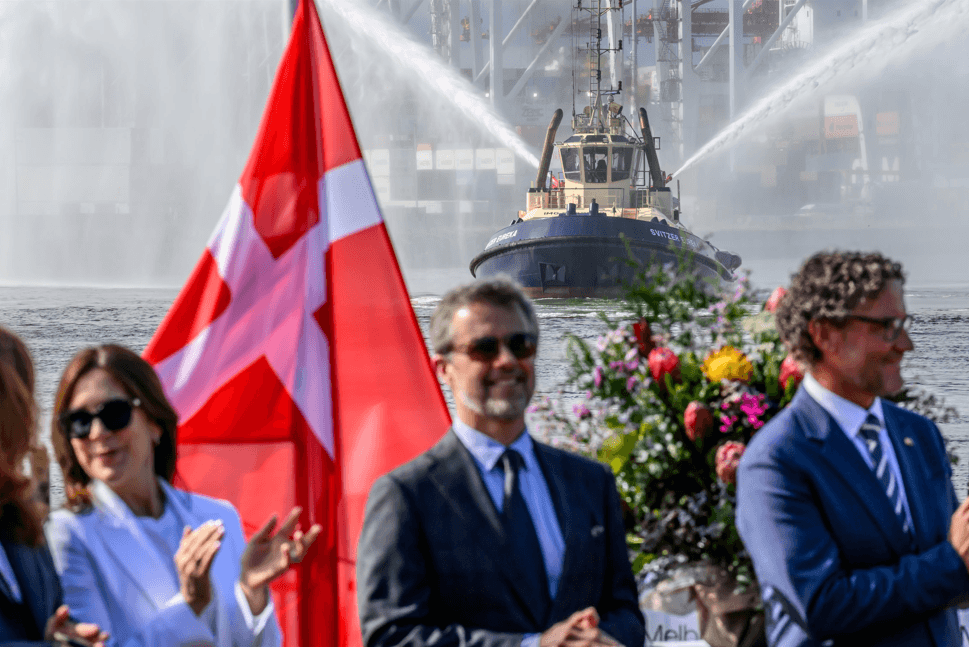
The MoU was officiated at the Port of Melbourne Education Centre yesterday, in the presence of Their Majesties The King and Queen of Denmark as part of the Danish State Visit to Australia.
The partnership – which also includes Copenhagen Infrastructure Partners (CIP) and Plexar Energy – establishes a framework for collaboration to assess the feasibility of introducing two fully electric TRAnsverse 2600e tugs in Melbourne. The framework will also explore the feasibility of a dedicated renewable energy microgrid and high‑capacity charging infrastructure.
Port of Melbourne CEO, Saul Cannon, said the collaboration reflects a shared ambition to improve port efficiency while accelerating the sector’s transition to lower‑emissions operations.
“Efficient, reliable towage services are critical to the smooth functioning of the port, and electrification offers the potential to improve both operational performance and environmental outcomes.
Through this MoU, we are exploring what it would take to bring the next generation of electric towage to Melbourne in a way that benefits port users, reduces emissions, and supports a more sustainable future,” Mr Cannon said.
The shift to electric towage has the potential to deliver a range of benefits for port users, including improved vessel handling performance, reduced noise and vibration, and greater predictability in operating costs. A dedicated renewable microgrid may also provide a resilient and efficient energy supply tailored to the specific operational requirements of tug services.
Svitzer Australia Managing Director, Videlina Georgieva, said the partnership with Port of Melbourne and CIP represents an important step in bringing the next generation of sustainable towage to Australia.
“Towage is critical to the performance of any port, and our biggest challenge for decarbonisation is reducing emissions without compromising safety, capability or reliability. At Svitzer, we are investing in the technologies that will help solve this challenge, and it is exciting to see Melbourne leading the way, through this collaboration, to make sustainable towage a working reality in Australia,” Ms Georgieva said.
Plexar CEO and Partner at CIP, Karsten Plauborg, said the partnership with Port of Melbourne and Svitzer highlights how microgrids and AI based optimisation tools can support electrification.
“We are grateful to our visionary partners and look forward to demonstrating how Plexar’s solutions, electrical engineering expertise and the direct use of onsite electricity generation can both optimise costs and increase power availability”.
The MoU was signed during the State Visit’s energy programme, themed “Partnering for a green, secure and sustainable tomorrow” – an opportune platform to highlight the Port’s collaboration with Danish firms Svitzer, CIP, and Plexar Energy. Further, the occasion underscores Port of Melbourne’s broader commitment to advancing decarbonisation and enhancing efficiency across the port supply chain.
“Transitioning port operations to cleaner, more efficient technologies is a shared challenge. Collaborations like this help us build the partnerships and capability needed to deliver meaningful progress for the sector and for Victoria,” added Mr Cannon.
193 Years in Operation: From Copenhagen Harbour to Global Towage
3 March 2026 – If you take a stroll around Copenhagen's historic — albeit touristy — Nyhavn district, you might stumble upon a statue of a man in a diving helmet on the side of a historic building. That diving helmet conceals more than just the diver's face; if you look a little deeper, you might also discover the history of a quiet achiever that founded what is now a global leader in the maritime industry. That company is Svitzer, which is celebrating its 193rd birthday today.
What follows is a short history on Svitzer’s founding and how the spirit of Emil Zeuthen Svitzer lives on through the company today.
On 3 March 1833, Emil Zeuthen Svitzer founded a small salvage company in Copenhagen with three vessels and a clear purpose. Trade moved by sea, and when something went wrong, the consequences were immediate and costly. Having experienced the risks of shipping first-hand, he set out to build a company that could respond quickly, reduce loss, and protect both people and property. 193 years later, that purpose still defines Svitzer. What has changed is the scale.
From local salvage operations in Nordic waters, Svitzer has developed into a global towage and marine services provider operating in 157 ports and 46 terminals, worldwide. Our expert team and capable fleet support container vessels, tankers, bulk carriers, and cruise ships in some of the world’s busiest harbours. Our crews work alongside pilots, port authorities and customers to keep trade moving safely, economies thriving and communities strong.
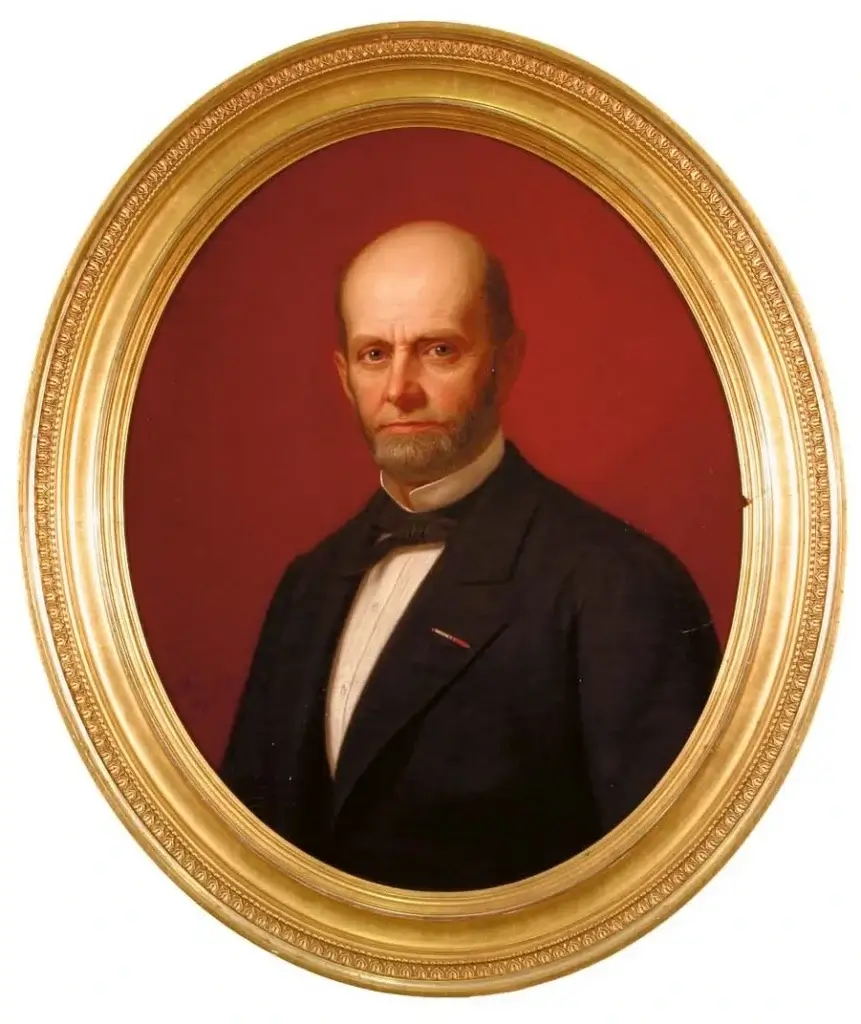
(Image: Emil Z. Svitzer 1805-1886)
Built on Practical Experience
In the early years, success depended on blending operational readiness with innovation. When the telegraph opened in Denmark in the 1850s, Emil Svitzer organised coastal contacts to ensure that incidents were reported quickly. When professional diving equipment became available, he invested in it. When steam propulsion changed the maritime industry, he adapted his fleet accordingly.
These were practical decisions taken by a founder who understood risk from experience.
As the business developed beyond its early years and into a formal company structure, that approach continued. Investment in capability, attention to operational detail, and willingness to adopt new technology became part of Svitzer’s way of working.
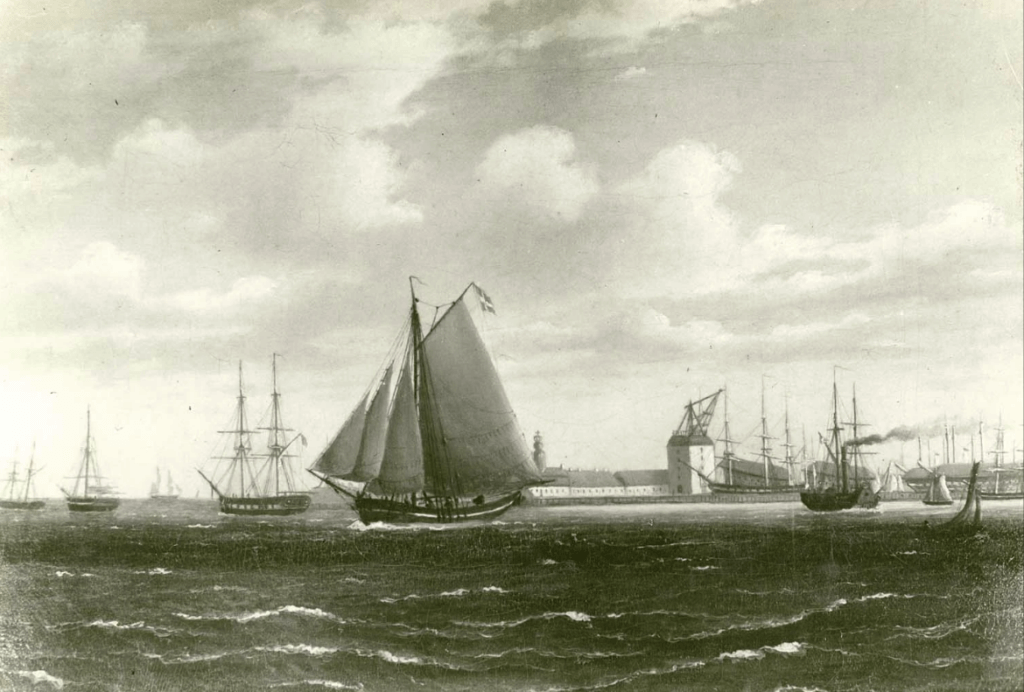
The inner roadsted of Copenhagen painted around 1850 by Carl Bille. The painting shows some of the characteristic types of vessels used at the time.
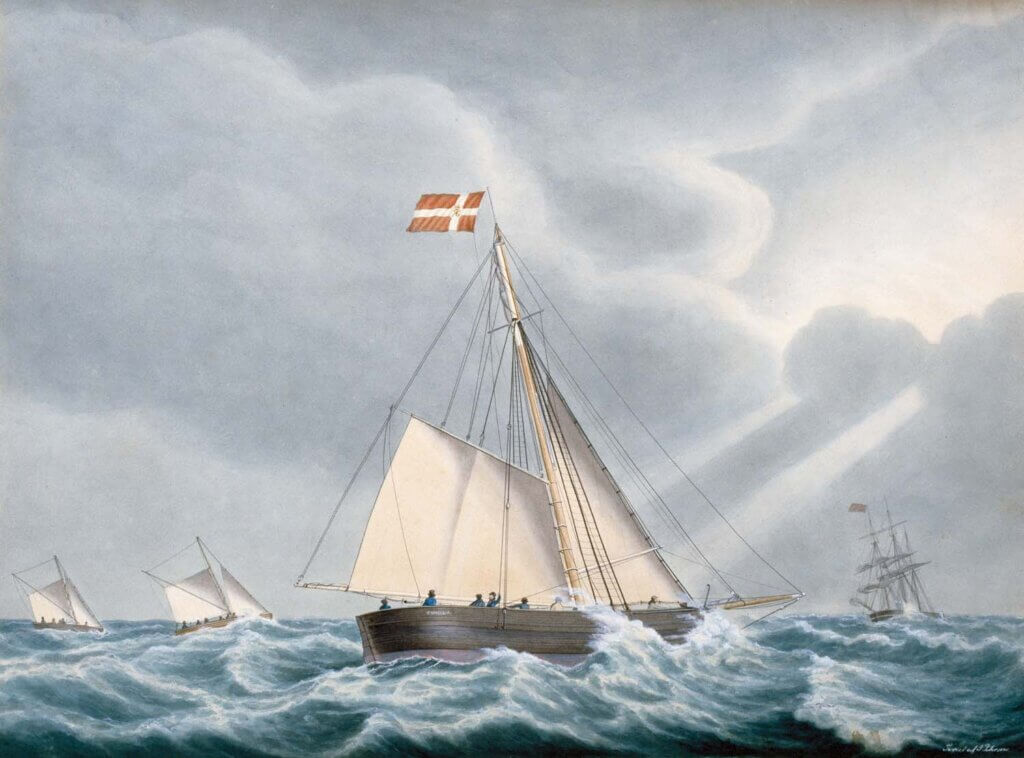
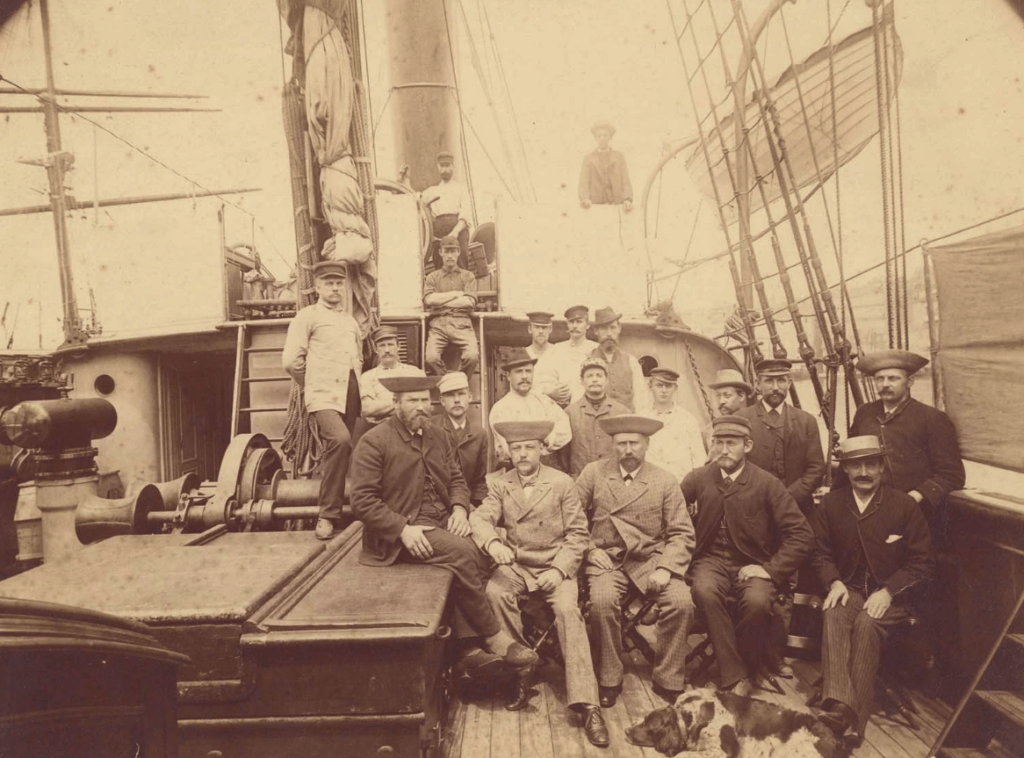
The salvage vessel EM. Z. SVITZER with crew. The vessel was built at the shipyard Burmeister & Wain in 1885. It was one of Svitzer's first steam ships.
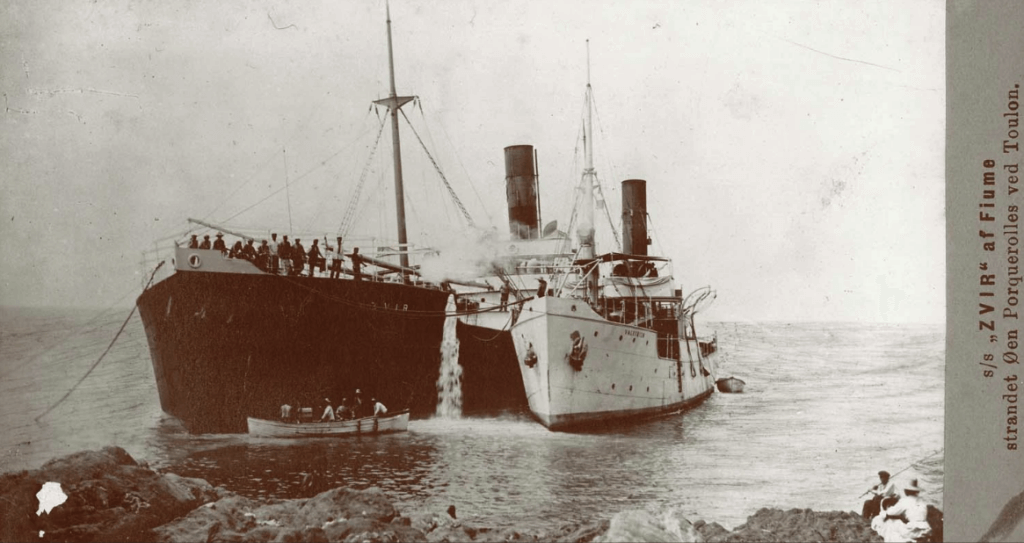
ZVIR OF FIUME stranded at the Porqeurolles islands by Toulon, France 1912. The repair made by a Svitzer diver during the salvage was so effective that the vessel could carry on to Marseille without further repairs. Alongside the vessel is the salvage vessel VALKYRIEN.
These practical decisions improved both response time and operational capability. As trade expanded, so did Svitzer. By the late 1800s and early 1900s, stations had been established beyond Danish borders, including in the Mediterranean and, later, Asia. This international growth required negotiation and partnerships, as well as disciplined leadership, and, of course, skilled onshore and offshore crews who could operate in unfamiliar waters. The lesson from that period still applies today; vessels and equipment matter, and people make the difference.
Innovation that reflects Experience and Heritage
The development of Svitzer’s fleet has both been guided by and anticipated operational and industry needs. From early steam-powered salvage vessels to high-powered ASD tugs, each generation of innovations has reflected the demands of its time. Acquisitions and fleet renewal over the last few decades have established Svitzer as the world’s leading towage and marine services provider. As we continue to focus on design, performance and innovation, the TRAnsverse tug is the latest example. The TRAnsverse tug represents the new benchmark for towage performance, responsiveness, power and safety. A proprietary design of Svitzer’s that combines a patented staple configuration with a new hull form and inline propulsion that provides outstanding manoeuvrability and operational flexibility in harbour and terminal towage.
At the same time, our industry is undergoing a structural shift towards decarbonisation, and Svitzer is actively contributing to that transition. The latest example being a commitment to build battery-electric TRAnsverse tugs – combining advanced design with net zero aspirations. Svitzer recently signed a shipbuilding agreement with Cochin Shipyard Limited in India for four TRAnsverse 2600e tugs, with options for additional vessels. These next-generation electric tugs will support fleet renewal and enable zero direct emissions during harbour operations when powered by green electricity.
Alongside electrification, we continue to reduce emissions in global towage through operational efficiency, hybrid propulsion, alternative fuels and close collaboration with ports and customers. Our EcoTow solution is one example. It provides customers with direct carbon insetting opportunities within their own maritime value chains, linking operational performance with measurable emissions reductions.
Svitzer Nobbys TRAnsverse 3200 tug, arrival August 2025. Port of Newcastle
Consent Required
This content is from YouTube. Please update your cookie settings to view it
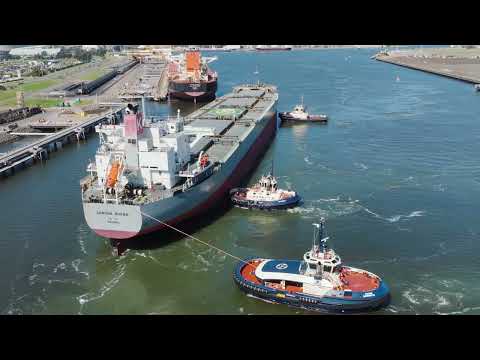
Meet the Inventors: Svitzer TRAnsverse tug
Long-Term Relationships Since 1833, our business has depended on trust. Historical accounts of the company highlight the importance placed on reputation among shipowners and marine underwriters. Professional conduct, responsiveness and maintaining goodwill were central to remaining competitive. That customer focus continues to define how we operate.
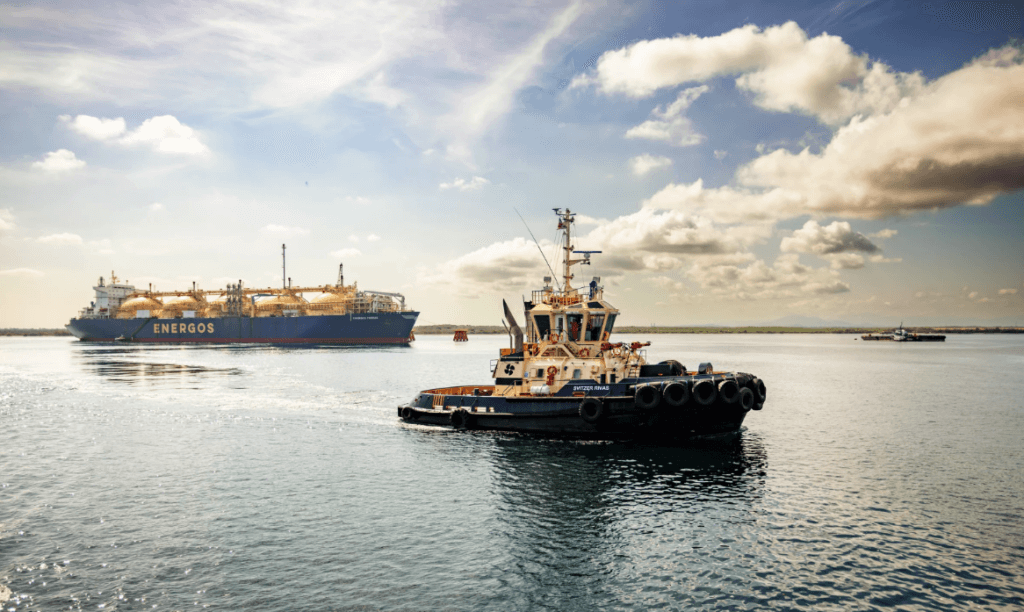
Today, our customers rely on us in situations where precision matters. A towage job may only take minutes, but the preparation behind it is extensive. Reliability and consistency are critical. (Image: Svitzer Rivas and an Energos vessel in the Dominican Republic, September 2025.)
In 2025, our Net Promoter Score reached 47, up from 46 in 2024 and an industry-leading NPS in our sector. Based on feedback from 183 customers across 298 responses, the result reflects strong confidence in our service delivery and reinforces our ambition to deepen customer partnerships globally.
Our People Across our fleet and offices, Svitzer is built on maritime experience and dedicated professionals. Tug masters, engineers and deck crews work in close coordination where timing, judgement and communication are key. A towage job may appear straightforward from the outside, but it depends on planning, vessel readiness, procurement of parts, maintenance schedules and a clear customer coordination behind the scenes.
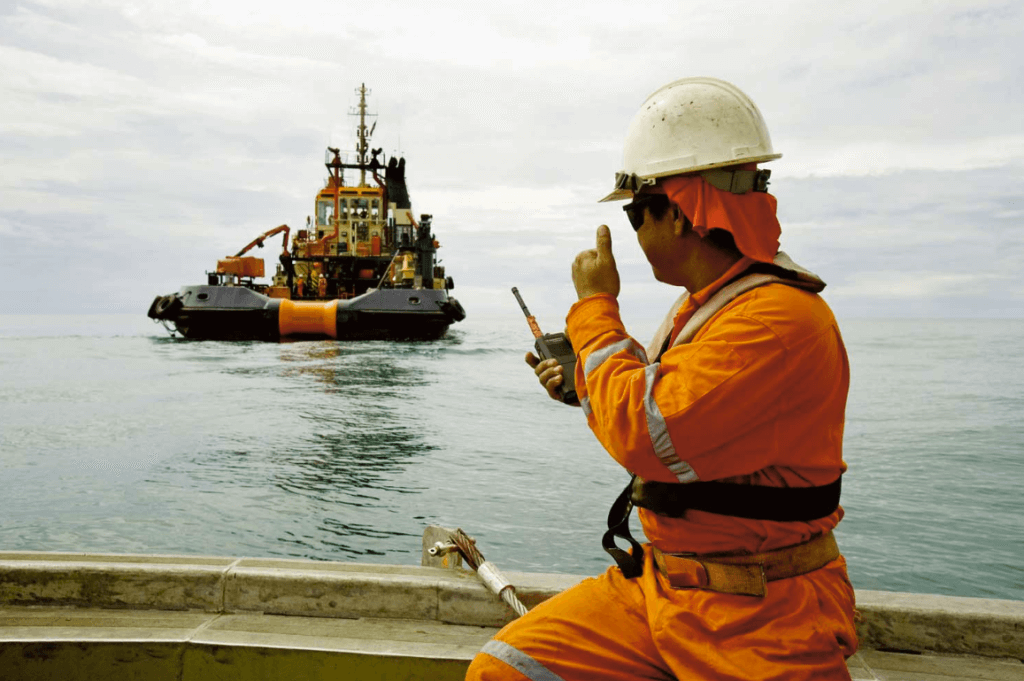
The same applies across shore-based teams. Operational planners, technical managers and commercial colleagues and many more ensure that vessels are maintained, resources are available and customer expectations are understood before a job begins, no matter when or where. As we mark 193 years, it is appropriate to recognise colleagues across regions who carry that responsibility every day, 356 days a year. Our performance is a reflection of the competence, discipline and judgement of our people in every port where we operate and the customers who trust us with their services. (Image: Svitzer Marine Support vessel UNIWISE RAYONG in action, offshore in the Gulf of Thailand)
Safety: Looking Out for Each Other At Svitzer, every day is Safety Day. Global Safety Day gives us a moment to pause and reflect on how we look out for each other across vessels, ports and offices. The 2025 theme, Looking Out for Each Other, highlights that safety is not only systems and procedures. It is behaviour, leadership and daily decisions that define us when we are working at our best. Through the Safety Awards, Everyday Actions, Extraordinary Impact, we recognise colleagues and teams across three categories
• Everyday Safety Hero • Team Safety Innovation • Mental Health and Wellbeing Champion
This year’s finalists demonstrate how safety is strengthened in practical ways across regions.
Everyday Safety Hero In Brisbane, Jeff Hircock has been recognised for consistently raising safety standards, supporting additional training and speaking up when risks are identified. In Tees, Scott Hill is known for proactively addressing issues before they escalate, helping maintain an injury-free working environment.
Team Safety Innovation In Paranaguá, Brazil, Captain Rangel Suzena Maria and the crew of Svitzer Roberto M. introduced colour-coded safety eyes on mooring lines to improve handling, reduce strain and strengthen control during operations. In Dampier, the crew of Svitzer Dragon developed a hose and valve system that removed manual handling from deck operations, reducing exposure and physical risk.
Mental Health and Wellbeing Champion In Bahrain, Sayed Hashem Mosa AlKamel provided steady support to colleagues following a difficult incident, reinforcing the importance of psychological safety. In the Americas, Jireh De Gracia has fostered a culture of regular check-ins and open dialogue.
In Fremantle, Zoe Gill has been recognised for encouraging conversations around wellbeing and supporting colleagues across teams. These examples reflect different aspects of safety, from operational discipline to innovation and mental health support. Together, they show that looking out for each other is not an abstract principle. It is visible in actions taken every day across our organisation.
193 Years in Context For nearly two centuries, Svitzer has evolved from conducting local salvage operations in Nordic waters to providing global towage services in major ports worldwide. Ownership structures have also changed. Technology has advanced. Trade patterns have shifted. In 2024, Svitzer was demerged and listed as an independent company. The following year, A.P. Moller Holding took full ownership.
Across ownership changes, new technology and shifting trade patterns, one thing has stayed consistent. Svitzer’s role is to deliver safe and reliable towage that keeps ports moving. That depends on disciplined teamwork, clear communication, and people who
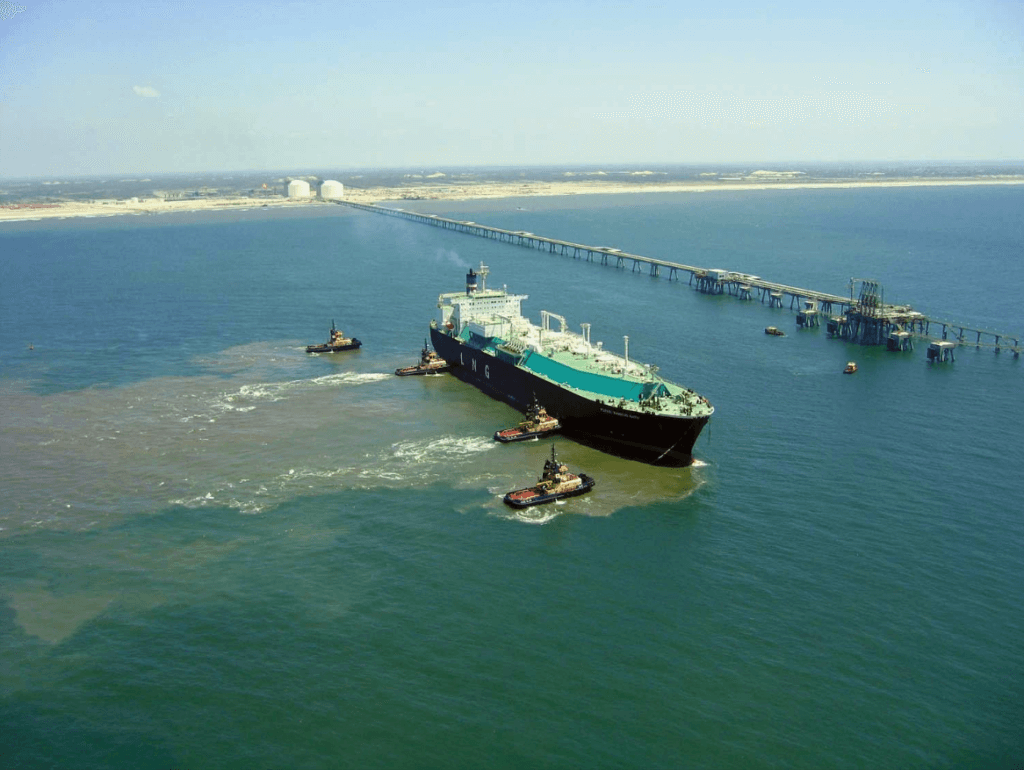
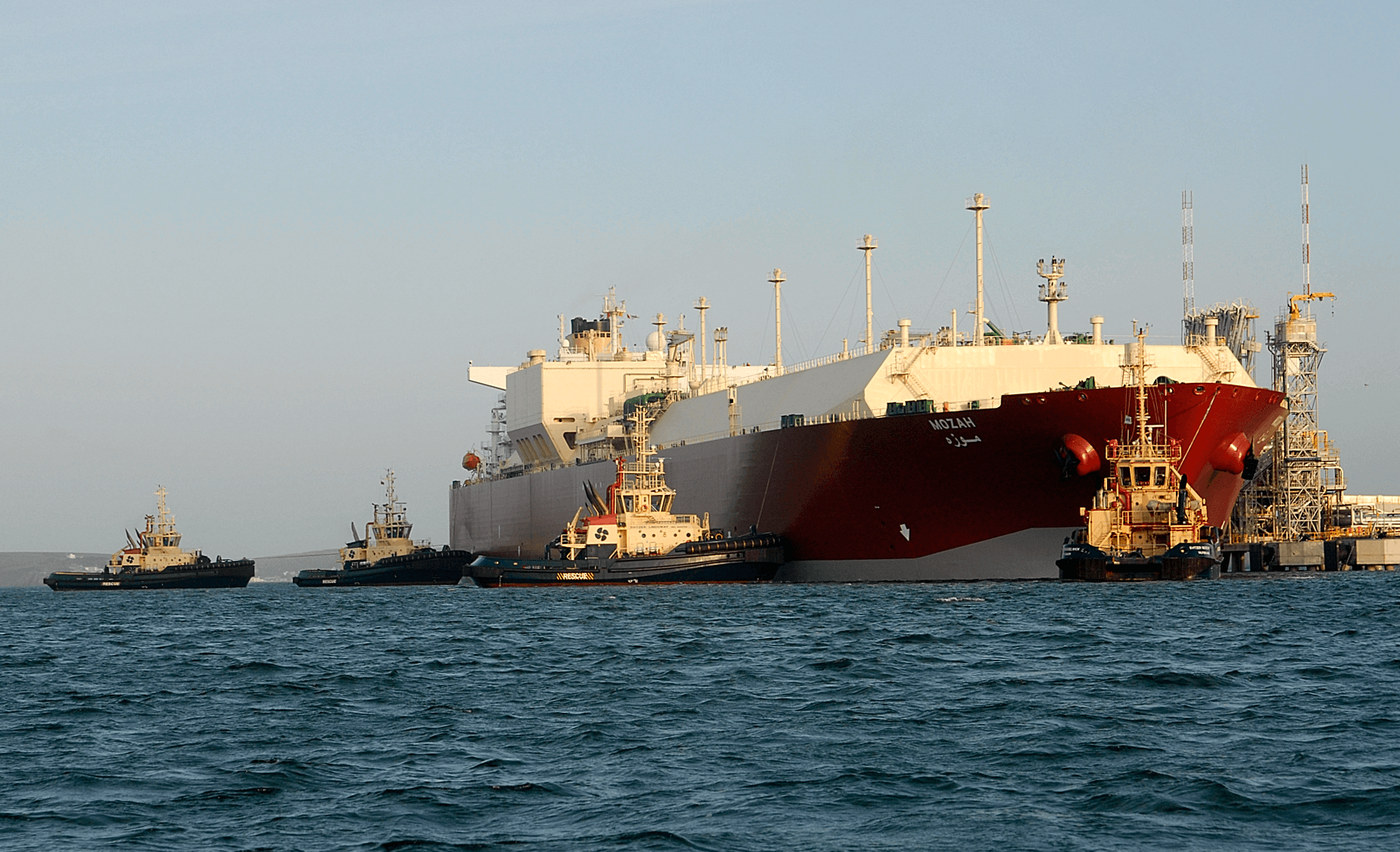
Svitzer tugs berthing a LNG tanker at the ELNG Terminal in Idku, Egypt.
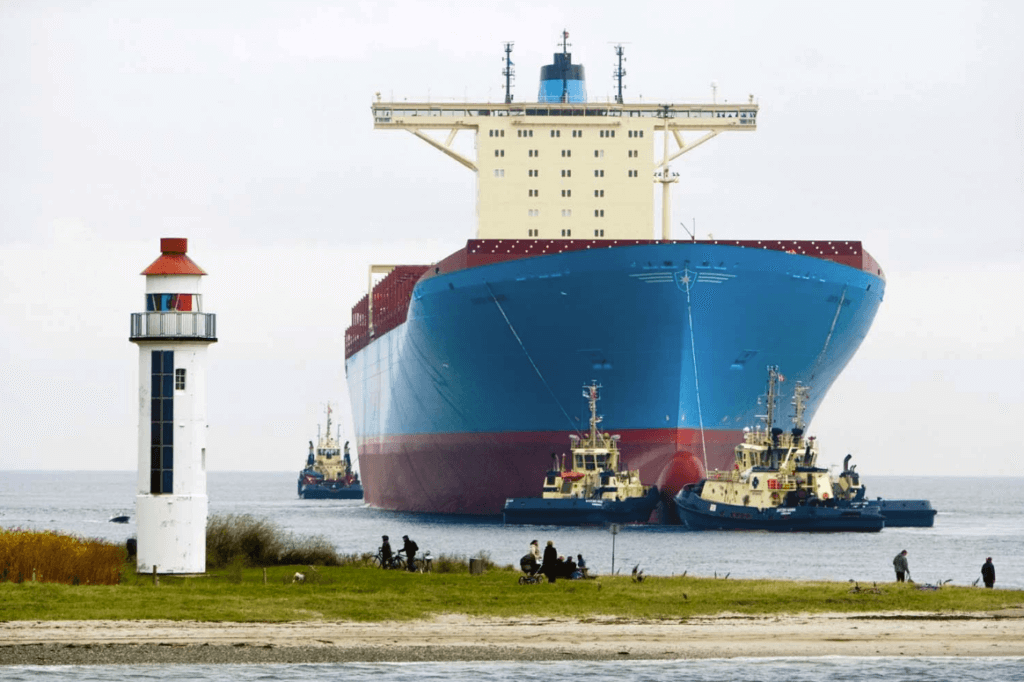
Tow-out of Maersk Line's 11,000 TEU containership EDITH MAERSK from Odense Steel Shipyard, Denmark.
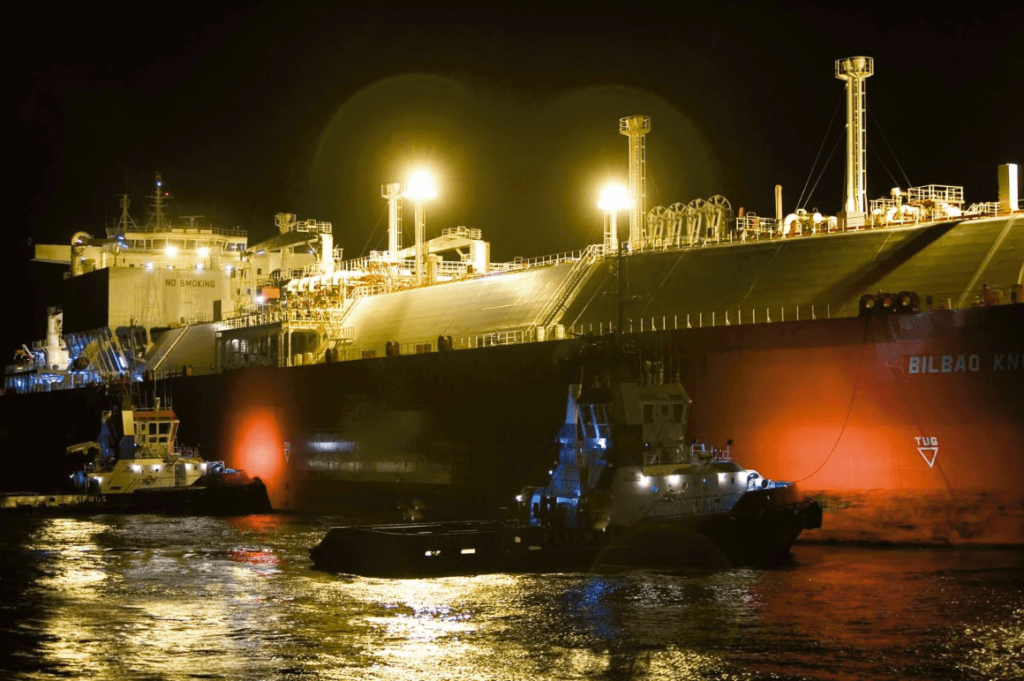
Svitzer Tugs assisting an LNG vessel at night.
Timeline • 1833 Emil Z. Svitzer establishes a salvage company in Copenhagen with three vessels. • 1842 First professional diving equipment acquired, strengthening underwater inspection and salvage capability. • 1860 First steam-powered salvage vessel introduced following the rebuilding of a salvaged steamship. • 1872 Company transformed into a stock company, enabling capital for expansion. • 1889–1910 International expansion with stations established in the Mediterranean, Northern Europe and later Asia, including Hong Kong. • 1956–1957 Appointed by the United Nations, together with Smit, to lead the clearance of the Suez Canal after it was blocked by sunken vessels. • 1960s–1970s Technological upgrades in salvage operations. Increasing use of vessels for towage, ocean towage and offshore marine services as global trade grows. • 1979 The A.P. Moller Group becomes majority owner. • 1999–2007 Global acquisitions including Röda Bolaget, Wijsmuller and Adsteam Marine establish Svitzer as the world’s leading towage provider. Significant fleet renewal undertaken. • 2003–2005 Strategic focus on towage and response services. Non-core activities divested. • 2015 Salvage activities merged into Ardent, later divested in 2019, sharpening focus on towage. • 2024–2025 Svitzer demerged from A.P. Moller – Maersk, listed on Nasdaq Copenhagen and subsequently taken into full ownership by A.P. Moller Holding. • 2026 Majority acquisition of Buksér og Berging
From day one: safe, uninterrupted towage at Oman LNG
From 1 January 2026, Svitzer has been providing towage services at Oman LNG’s terminal in Qalhat, a critical energy infrastructure operation where reliability, safety and readiness are non-negotiable.
With demanding operational requirements, the mobilisation has been built around one clear outcome: a safe and seamless transition, enabling the operation to perform from day one, supported by strong safety standards and clear oversight.
Deniz Kirdar True, Managing Director, AMEA, Svitzer, says: “Delivering a safe start from day one takes discipline, teamwork and absolute clarity on standards. I’m proud of how our people came together across countries and functions to mobilise the operation on time, delivering with the safety standards you can expect from Svitzer.” .
A cross-country mobilisation, powered by people
Delivering a day-one start at this scale required a cross-country and cross-region effort, drawing on operational, technical, HSE and support expertise from across Svitzer. Teams worked together to align procedures, assurance activities and on-the-ground capability, so the operation could perform from the first vessel movement.
A key part of the mobilisation has been integrating the local team. Svitzer is pleased to welcome over 70 new colleagues as part of the operation, strengthening capability in-country and supporting long-term service delivery.
Building in Oman, and in-country value embedded from the start
Oman LNG’s requirements extend beyond operational performance. Svitzer’s mobilisation supports these commitments through local recruitment and capability building, creating long-term value through skills development and strengthened maritime capability in-country.
As part of Svitzer’s fleet renewal programme for the operation, one of the tugs will be built in Oman , supporting job creation and contributing to the development of local manufacturing capability.
The Oman-built tug will be a 32-metre tug with 65-tonne bollard pull, and is expected to be delivered in the first half of 2027.
Svitzer’s focus at Oman LNG remains clear: safe and reliable service, consistent standards, and being ready when the customer needs us - delivered by local capability, while backed by international expertise.
Svitzer announces changes to its leadership in the Americas and Europe
Panama City and Copenhagen, 22 December 2025 – Svitzer, a leading global towage provider, has announced leadership changes in Europe and the Americas. For the past six years, Arjen Van Dijk has served as Managing Director of Svitzer’s operations in the region. He will now move on to lead Svitzer’s European business.
“Svitzer has seen significant growth in the Americas in recent years, and today, we operate in 13 countries in the region with more than 100 vessels. This progress is a testament to our dedicated and experienced colleagues who, day in and day out, provide safe and reliable towage services to our customers,” said Arjen Van Dijk.
Daniel Reedtz Cohen will succeed Arjen as Managing Director of Svitzer Americas. He has been with Svitzer for the past 12 years, the last nine years in Brazil, most recently serving as Managing Director.
“It’s a privilege to take up the MD role, and I look forward to partnering with our customers to support their growth in the Americas region. Towage plays an essential role in efficient, reliable supply chains, and the region’s growth potential can be improved by optimising this critical infrastructure in ports and terminals,” says Daniel Reedtz Cohen.
The changes come into effect on 1 January 2026. Arjen Van Dijk and Daniel Reedtz Cohen will both be members of Svitzer’s Executive Leadership Team and report to Svitzer’s CEO, Kasper Friis Nilaus.
In the Americas, Svitzer is currently present in 13 countries and 26 ports, operating more than 100 vessels in South and Central America, the Caribbean and Canada, serving major ports and providing critical support to industries.
Daniel Reedtz Cohen – MD Americas
Cochin shipyard to build next-generation electric TRAnsverse tugs for Svitzer
Cochin, India and Copenhagen, Denmark – 8 December 2025
Svitzer, a leading global towage provider, and Cochin Shipyard Limited (CSL), India’s largest public sector shipyard, have signed a shipbuilding agreement for four 26-metre electric TRAnsverse (“TRAnsverse 2600e”) tugs to be constructed in India for Svitzer’s global fleet renewal and growth plans.
The agreement confirms a Letter of Intent signed in October 2025 at India Maritime Week and marks the move from intent to a contracted new build agreement.
Under the agreement, CSL will build a minimum of four battery-electric TRAnsverse 2600e tugs for Svitzer, with an option for up to four additional vessels. The tugs will be constructed to Svitzer’s specifications at CSL’s facilities in Cochin to serve as global fleet renewal and advancement in operations worldwide. The vessels complement a wider newbuilding program of the TRAnsverse tug design, cementing Svitzer’s confidence in the vessel’s capabilities while also opening opportunities for future deployment in Indian ports and terminals.
The deal brings together Svitzer’s global expertise in sustainable towage solutions with CSL’s proven shipbuilding capabilities, skilled workforce and local innovation. It supports India’s ambition to become a global maritime manufacturing and skills hub under Maritime India Vision 2030, Maritime Amrit Kaal Vision 2047 and the “Make in India” initiative.
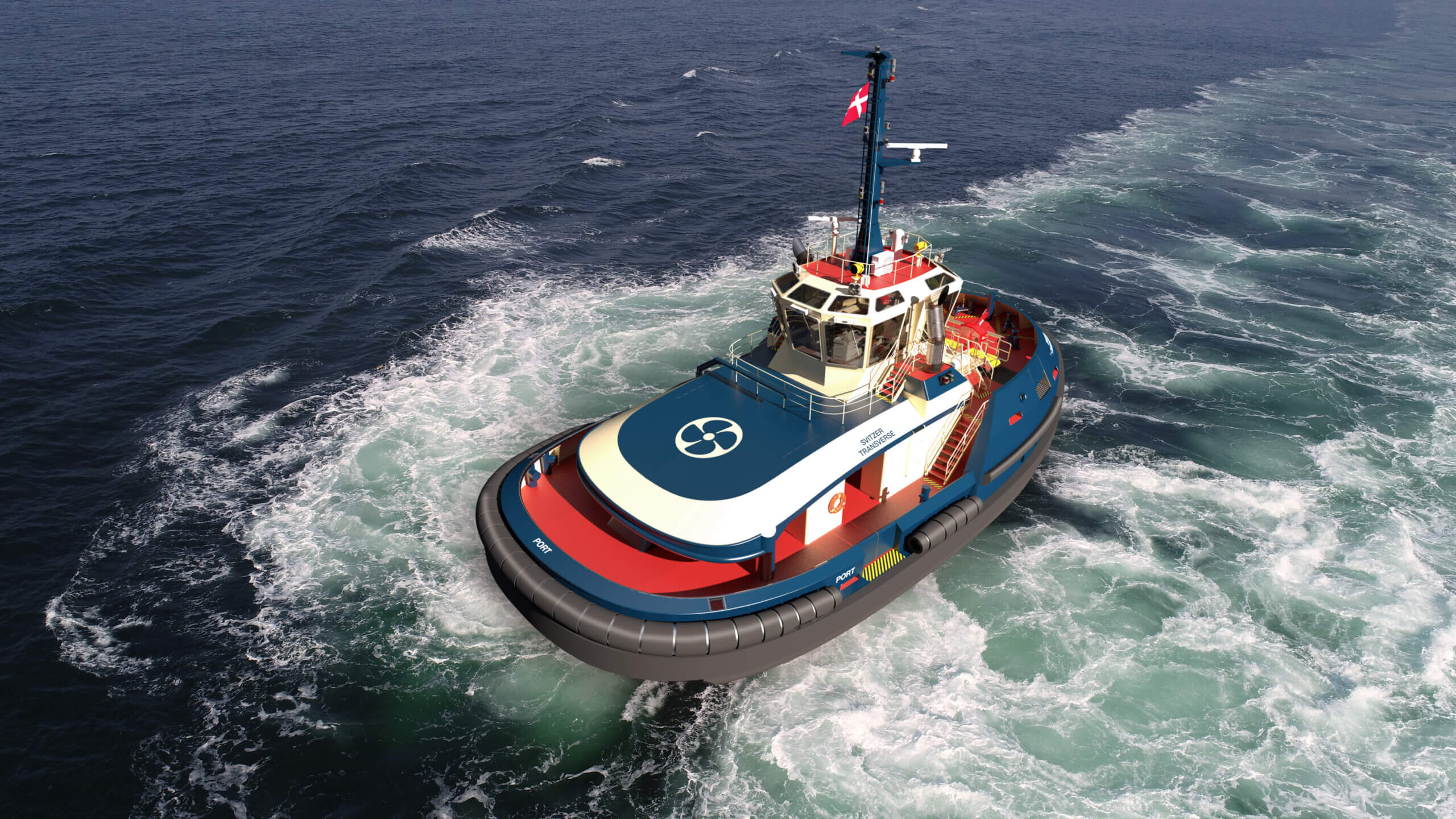
The TRAnsverse 2600e tugs are the electric version of the next-generation tug design proving itself as the world’s most advanced and efficient tug. The ‘Swiss Army Knife’ of tugs: the TRAnsverse design can operate in complex and close-quarter operating contexts, with all ship types and sizes in challenging weather and tidal conditions. The vessels will feature battery-electric propulsion and offer port and terminal operations zero direct emissions during harbour operations when charged from green power sources.
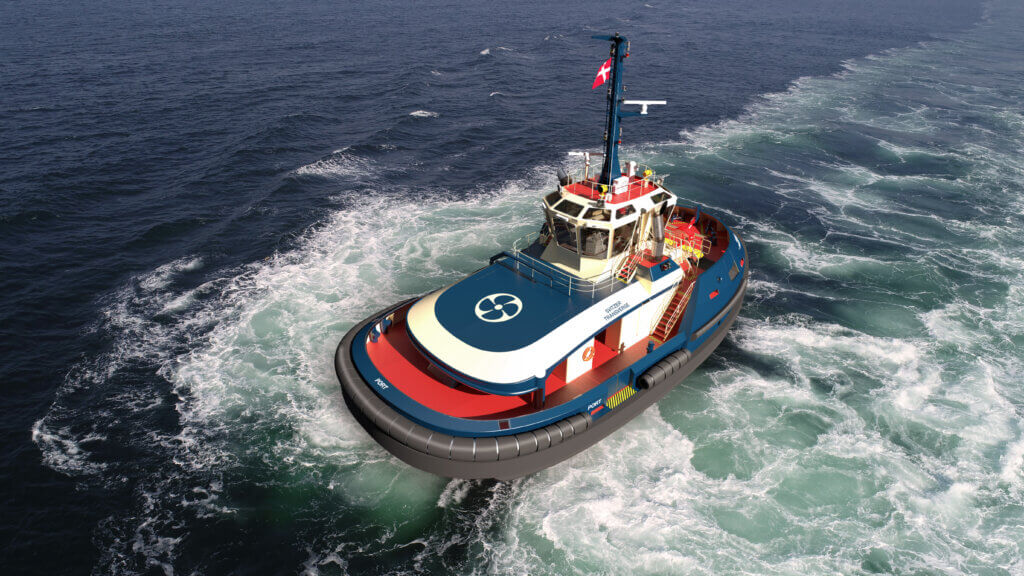
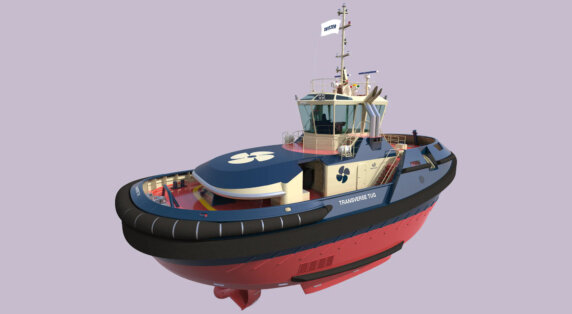
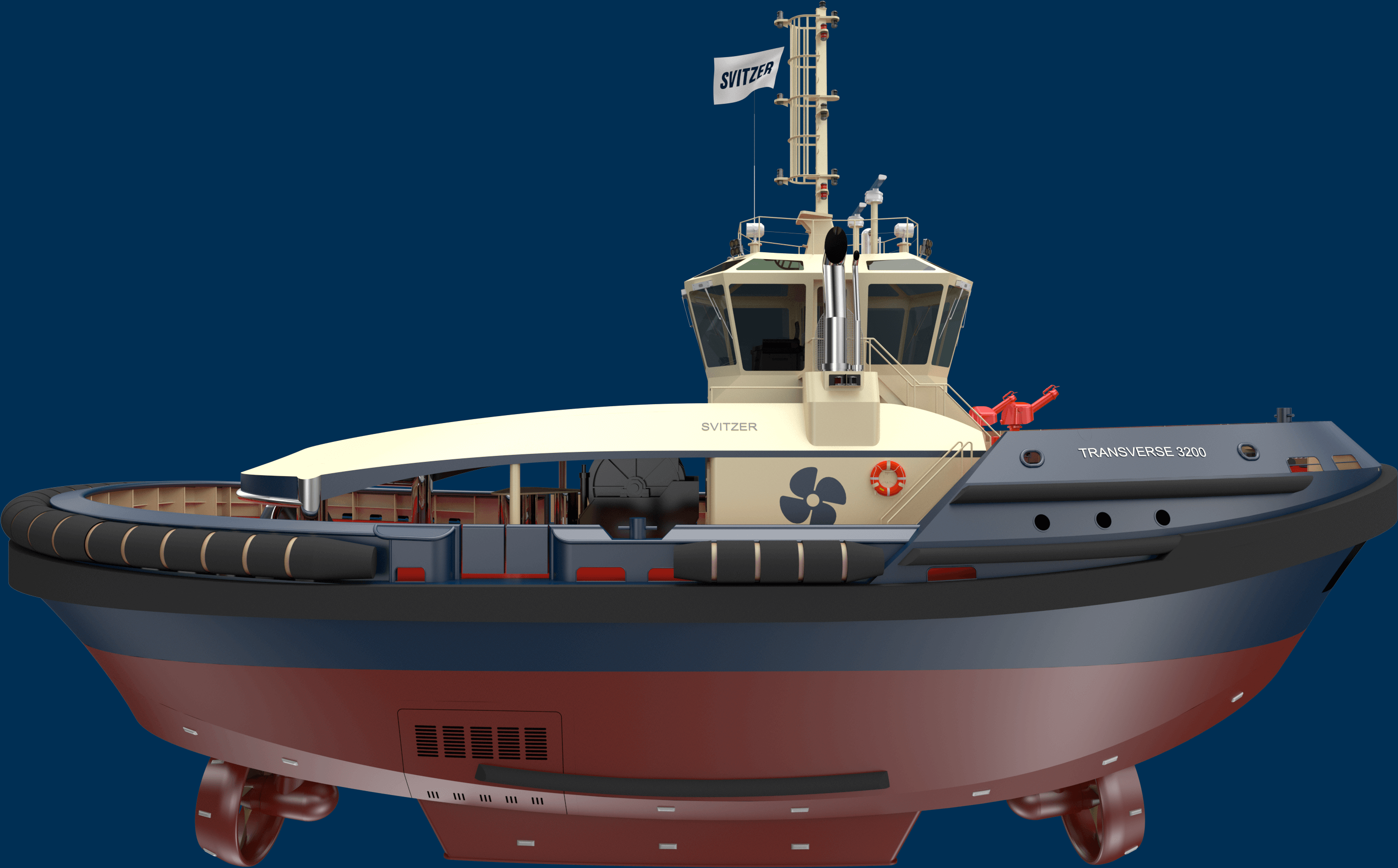
Render of Svitzer TRAnsverse 2600e (26m electric TRAnsverse tug)
The tug’s patented staple with double-ended hull and in-line propulsion with omni-directional thrust expands the dynamic operating envelope in towage up to 50%.
“This contract with Cochin Shipyard for our next series of electric TRAnsverse tugs reflects our commitment to Make in India and to support port and terminal operations in their green transition and decarbonisation objectives.
“India has strong shipbuilding capabilities and a highly skilled workforce. Through this collaboration with CSL, we are not only investing in a series of advanced tugs for our own operations – we are also helping to build capacity for world-class, low- and zero-emission tug construction in India – signalling our trust in India’s existing capability and maritime vision.
We welcome the opportunity to work closely with the CSL team to deliver these vessels and, in doing so, to support the goals of Maritime India Vision 2030 and Maritime Amrit Kaal Vision 2047 in a very practical way.”
Madhu S Nair, CMD of Cochin Shipyard Limited, said:
“We look forward to delivering the next generation of tug, the TRAnsverse 2600e, drawing on CSL’s skilled workforce and our track record in complex, high‑spec vessels. This agreement represents a natural expansion of our capabilities into advanced tug design and the industrialisation of battery‑electric and future‑fuel‑ready technologies in India.
The programme will deepen our expertise in electric propulsion, high‑precision manoeuvring systems and integrated digital solutions for ports and terminals, while creating opportunities for our engineers, designers and local supply chain.
As a Government of India company, we remain committed to Make in India and to the decarbonisation of maritime transport. Together with Svitzer, our goal is to deliver a world‑class asset with significant decarbonisation credentials for ports in India and around the world.”
The first four vessels under the agreement are expected to enter construction over the coming months, with the first delivery targeted no earlier than late 2027 / early 2028, subject to detailed design, yard scheduling and regulatory approvals. Further vessels may follow in line with Svitzer’s fleet renewal plans and customer demand.
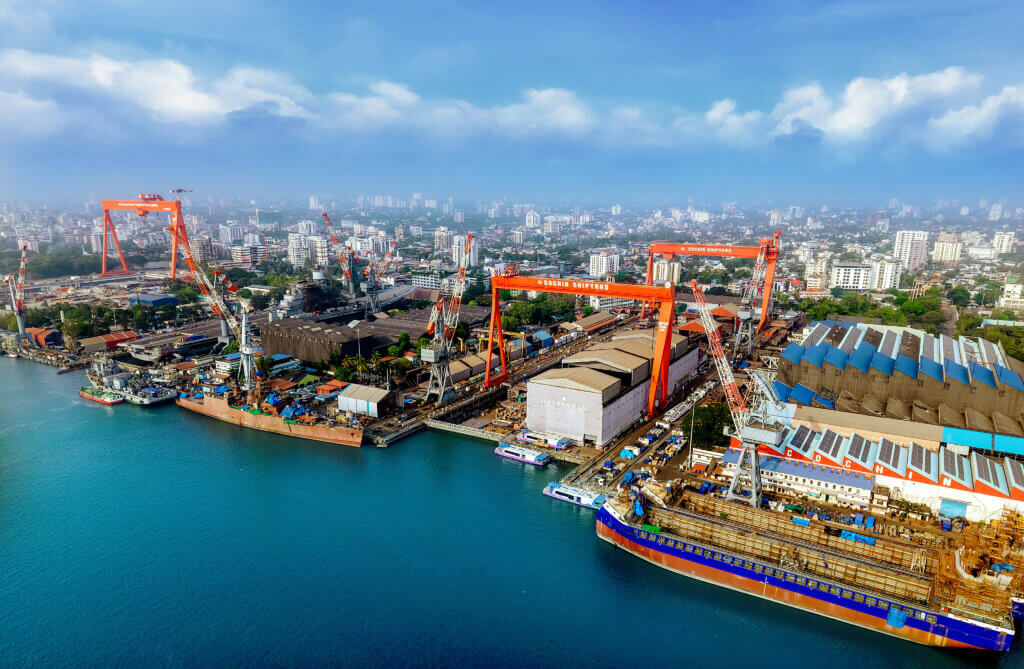
CSL shipyard Cochin, Kerala, India
Twin Tugs, One significant step-change: Svitzer Showcases the Future of Towage in New Short Documentary
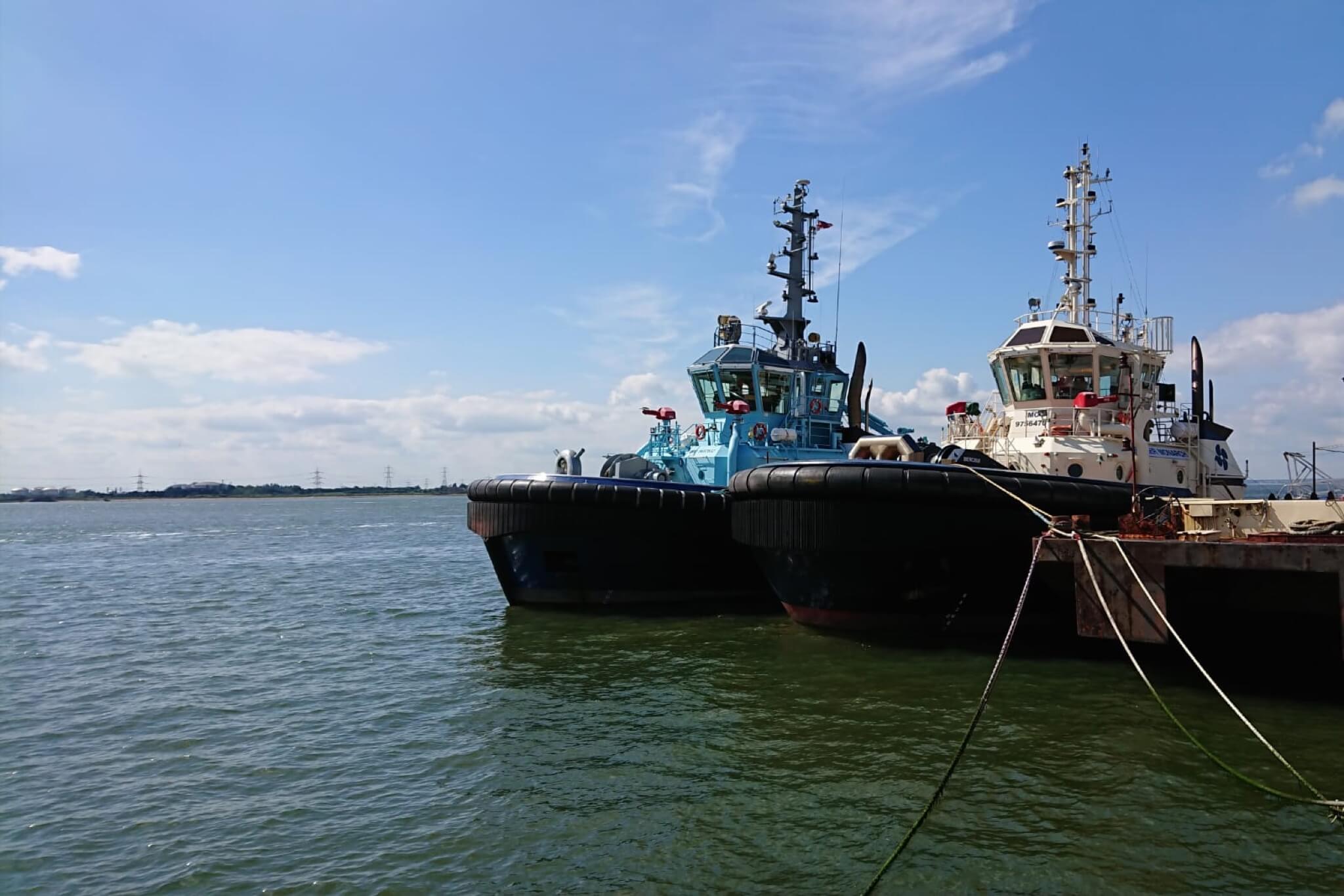
For the first time, two of Svitzer’s revolutionary TRAnsverse tugs are operating side by side, providing a significant uplift in capability to the demanding operations of the second busiest port in Australia.
Captured in a new short documentary filmed in Newcastle, Australia, Mega Machines – Svitzer Barrington and the TRAnsverse 3200: The Future of Towage, offers an on-water look at the TRAnsverse 3200 in action.
Consent Required
This content is from YouTube. Please update your cookie settings to view it
In focus is how the tug responds to the wide risk mitigation requirements reliant on towage – through its unique design features providing versatility, responsiveness and power.
The result is a practical demonstration of how power and precision come together to make towage safer and more efficient.
“The TRAnsverse represents a generational step forward in tug design,” says Kasper Karlsen, Chief Operating Officer, Svitzer. “It’s not just about more power, but smarter, safer, and more efficient operations. The innovation of this tug lies in how it can adapt safely and responsively to pilot orders, for a variety of manoeuvres, in different and often difficult operating sea states and weather.
“The outcome and priority of course underpinning everything is to help our customers navigate the world’s largest vessels safely, reliably and sustainably – and to keep trade moving.”
Developed with naval architects Robert Allan Ltd, the TRAnsverse design expands the operating envelope by up to 50% more compared to conventional tugs, improves fuel efficiency by up to 15%, and enables dynamic operations including sidestepping speeds of up to 8 knots and lateral push, all while maintaining stability and control.
The new short documentary complements Svitzer’s TRAnsverse Tug White Paper, which details the in-depth research and development, test and trial process that underpin the tug’s performance in operations today. Together, they illustrate how Svitzer continues to move towage forward: safely, efficiently, and responsibly.
The Mega Machines video is available on Svitzer’s Global YouTube channel alongside the full white paper on Svitzer.com.
Copenhagen, Denmark: Global towage and marine solutions provider, Svitzer Group A/S (Svitzer), has acquired a 66.6% stake in leading Norwegian towage and marine service company, Buksér og Berging AS, subject to final regulatory approvals.
Svitzer’s investment represents a partnership opportunity for both companies, with a view to leverage extensive shared knowledge and experience of the global towage, offshore, adjacent maritime service and marine solution markets.
Buksér og Berging AS is a leading supplier of marine services within port and terminals, towage, offshore work and complex marine operations in Norway.
Svitzer is a leading, global towage and marine services provider with more than 450 vessels globally.
There is no integration activities related to the transaction for either company and Buksér og Berging will continue to operate as a standalone company under its own brand, management, values and strategy.
Buksér og Berging is a leading supplier of marine services within port and terminals, towage, offshore work and complex marine operations.
Quotes attributable to Buksér og Berging, CEO, Vetle J. Sverdrup:
“Our leadership in the Norwegian towage and marine contracting markets is built on our values, tradition and the extensive operational and technical knowledge of our capable teams and their drive to solve challenges for customers.
“The investment by Svitzer presents an opportunity to continue our legacy and deepen our capabilities with a strategic partner that is a highly regarded, global company with long-term ambitions for Buksér og Berging’s success.”
CEO of Buksér og Berging, Vetle J. Sverdrup, will continue in his role and maintain a 33.4% shareholding position and active ownership of the business.
Buksér og Berging has an advanced fleet of about 35 tugs, 25 pilot boats, three ambulance vessels and one service vessel for salmon farming (delousing vessel). It is headquartered in Oslo, Norway with branch offices in Stavanger and Fedje, outside Bergen.
Svitzer’s investment will underpin commitments by both companies to share expertise and excellence in maritime operations; innovation and capabilities in vessel design and operations; and together grow innovation and enhance standards and safety in the towage and marine services sector.
Quotes attributable to Svitzer CEO, Kasper Nilaus:
“Buksér og Berging, like Svitzer, has a proud heritage, and our investment is an exciting opportunity for us to join forces and share our respective expertise and leadership positions in the towage and maritime infrastructure markets.
I am confident together we will drive innovation and growth for both companies, further cement our decarbonisation credentials, and above all strengthen the value, safety and service offered to customers and their supply chains.”
Svitzer CEO, Kasper Nilaus
Media Contact: Bas Bolyn, Global Head of Communications, Svitzer. m: +45 31 48 27 90 and e:[email protected]
Svitzer and Cochin Shipyard Ltd. sign Letter of Intent to advance electric TRAnsverse tug manufacturing in India
Mumbai, India – 31 October 2025
Svitzer today announced the signing of a landmark Letter of Intent (LoI) with Cochin Shipyard Limited (CSL) to construct a new generation of electric TRAnsverse tugs in India. The agreement marks a clear step forward in Svitzer’s electrification roadmap and in strengthening India’s role as a global maritime manufacturing hub.
Under the LoI, Svitzer and CSL will collaborate on plans to build electrical TRAnsverse tugboats at CSL’s yard facilities in India — signaling Svitzer’s long-term intent to Make in India and to bring to market one of the most advanced and environmentally progressive tug designs to support India’s green port and green towage ambitions. Signature took place during India Maritime Week in Mumbai.
The collaboration will combine Svitzer’s global expertise in sustainable towage with CSL’s excellent shipbuilding capability and the wider strengths of India’s engineering talent, supply chains and innovation ecosystem.
Svitzer Taurus is a 26m conventional diesel powered TRAnsverse tug design. The Letter of Intent with Cochin Shipyards Ltd is for 26m electric version.
The TRAnsverse concept is central to the partnership.
Known for exceptional manoeuvrability and efficiency, TRAnsverse tugs provide precise control in confined waters, improving safety and operational performance while reducing energy use and emissions.
“With this LoI we are taking a decisive step on our electrification journey. India’s shipbuilding ecosystem—and CSL’s proven track record—make Cochin a great place to further develop and build the TRAnsverse. We see strong alignment with the Government of India’s Maritime India Vision 2030 and Maritime Amrit Kaal Vision 2047. By pairing Svitzer’s nearly 200 years of towage experience with Indian engineering and manufacturing strength, we aim to deliver cleaner, safer and more efficient harbour operations for customers in India and around the world.
Kasper Nilaus, CEO, Svitzer,
These vessels are intended for Svitzer’s global fleet renewal and growth markets, and will also create the opportunity for a locally built, world-class design to be deployed in Indian port and terminal operations.
“We look forward to working closely with Svitzer to make plans for building the next generation TRAnsverse tug in India. This collaboration will showcase CSL’s world class capabilities, deepen local supply chains and talent, and accelerate the availability of green, high performance tugboats for ports at home and abroad.”
Madhu S Nair, Chairman and Managing Director, Cochin Shipyard Limited, said:
This partnership represents a significant step toward decarbonising towage and advancing India’s maritime industry toward a low carbon future. As critical first- and last-mile port infrastructure, Svitzer’s towage solutions, decarbonisation expertise and asset mix provide a strong foundation to enhance the sustainability of port operations.
New TRAnsverse tug arrives in Newcastle, Australia
Arrival of world-first tugboat design to Australia delivers generational advancement in marine services.
The Port of Newcastle‘s maritime capabilities are set for a significant enhancement with the arrival of the state-of-the-art TRAnsverse tug Svitzer Barrington, which will join Svitzer Australia‘s fleet at the port.
The 32-metre TRAnsverse tug represents a generational advancement in towage standards, innovation and performance Svitzer Australia’s Chief Operating Officer David Phillips said.
“This tug class is purpose-built for versatility and power, maintaining high steering and braking forces through a range of movements without losing the dynamism or responsiveness required by marine pilots,” Mr Phillips said.
“The arrival of Svitzer Barrington, soon to be joined by her sister tug, Svitzer Nobbys, represents our ongoing investment into Australian ports, helping them operate to the highest levels of safety, efficiency and in a way that helps our maritime sector grow in a more sustainable world.”
Behind the TRAnsverse tug’s impressive look and performance are unique design features, including a patented half-circle towing staple – able to support advanced towing manoeuvres – and a double-ended hull and propulsion layout that maximises the benefits of the staple design.
In dynamic modes the TRAnsverse tug expands the operating envelope by around 50% compared to similar or larger ASD tugs. The TRAnsverse tug performs a wider range of jobs, faster, more efficiently and to a generally higher level of safety. The tug has also been shown to provide a fuel efficiency gain of 15%.
Source: TRAnsverse Tug White Paper
Svitzer Barrington has been deployed to the Port of Newcastle as it is one of the busiest ports in Australia and services a range of large vessel types in complex tidal and weather conditions. The Newcastle operations will serve as a proving ground for the TRAnsverse tug technology, validating its performance for broader global deployment across various towage applications.
“Towage provides a critical service within the Port of Newcastle, ensuring the safety and reliability of shipping and port operations. The new TRAnsverse tug class represents a significant uplift in capability, further enhancing the Port of Newcastle’s resilience and growth into the future. We look forward to seeing Svitzer Barrington’s performance on the water and the additional flexibility she provides to our operations.”
Craig Carmody, CEO, Port of Newcastle
Svitzer Barrington during sea trials in Turkey
The port sees more than 4,500 vessel visits a year – including large capesize vessels shipping export coal, bulk grain and agri vessels, container ships, breakbulk freight, cruise vessels and more.
As vessels become larger, weather conditions more extreme and ports more congested, the demand for tugs to assist vessels safely in and out of ports and terminals continues to increase. The logical extension is that tugs have gradually needed to become more powerful, as well as more fuel intensive. However, the TRAnsverse tug’s design and technical features have shifted that assumption, as demonstrated in a recent white paper demonstrating the superiority of its performance.
Svitzer Barrington will be joined by her sister tug Svitzer Nobbys in August.
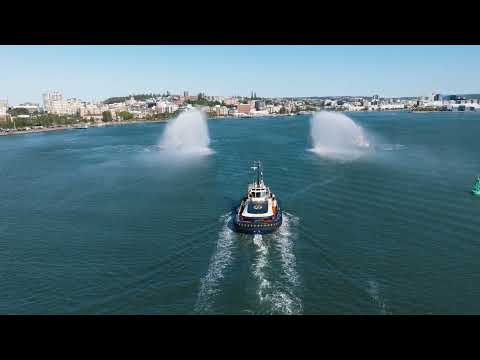
Watch the video of Svitzer Barrington’s arrival to the Port of Newcastle below.
Consent Required
This content is from YouTube. Please update your cookie settings to view it
Svitzer Barrington, a TRAnsverse 3200 tug, arrives in Newcastle. Her arrival marks a step up in towage capability not only for the port but represents a generational advancement in towage standards, innovation and performance.
Svitzer Barrington Specifications
3200 TRAnsverse tug designed by Robert Allan Ltd and Svitzer
Length Overall: 32 metres
Beam: 13.7 metres
Operational Draft: Approximately 6.1 metres
Bollard Pull: 81 tonnes
Speed Astern: 14.4 knots
Speed Sideways: 7.5 knots
Maximum Escort Steering Force (10 knots): 124 tonnes
Maximum Braking Force (10 knots): 186 tonnes
Svitzer Barrington is one of four variants, the others measure 35m, 29m, and 26m.
The TRAnsverse tug delivers direct towage capability at higher speeds and seamlessly transitions to indirect (and back again), providing Pilots with greater control margin during transits or when shaping a turn in a limited navigable channel. The tug remains stable, holds force consistently, and recovers rapidly between vector changes.
The Magic Staple
The key to the TRAnsverse design lies in its patented “half-circle” staple which allows us to achieve a more optimal pivot point without any extra moving parts. The two azimuth drives are mounted centrally on the forward and aft end of the tug, rather than side by side. Combined with a hull form optimised for omnidirectional thrust, this arrangement allows the TRAnsverse to generate lateral force in any direction with reduced response time, making us far more agile than traditional setups.
The names of the new TRAnsverse tugs (Svitzer Barrington and Svitzer Nobbys) were selected recognizing connection as a pair of sister tugs of bringing in the Barrington Tops national park as the starting point of the Hunter River; flowing 460km to its entrance at Newcastle. It is a reflection of the entire Hunter Valley community (and wider region) relationship to the Port from a social, economic and geographic point of view.
Nobbys Head is then the mouth of the Hunter River and a prominent focal point for Newcastle – again from a local community point of view, everyone knows of Nobbys Head – but from a maritime point of view, every visiting crew know of the landmark, and mark it in the charts when arriving – not least its current and historic navigational significance as the first and last land formation that visiting vessels encounter in the Port of Newcastle..
Naming the Ship’s Bridge Simulator, ‘Hunter’, then nicely ties these elements of the river into the Simulator.
The Judging panel for the names included Newcastle Harbour Master Vikas Bangia, Mission to Seafarers Regional Director, Rev. Garry Dodd and new Training Superintendent charged with bringing the new TRAnsverse tugs into Newcastle, Master Ben Holder. Better known as the Harbour Master, the Master and the Pastor.
Consent Required
This content is from YouTube. Please update your cookie settings to view it
Svitzer signs global Ecotow agreement with Wallenius Wilhelmsen to drive decarbonisation
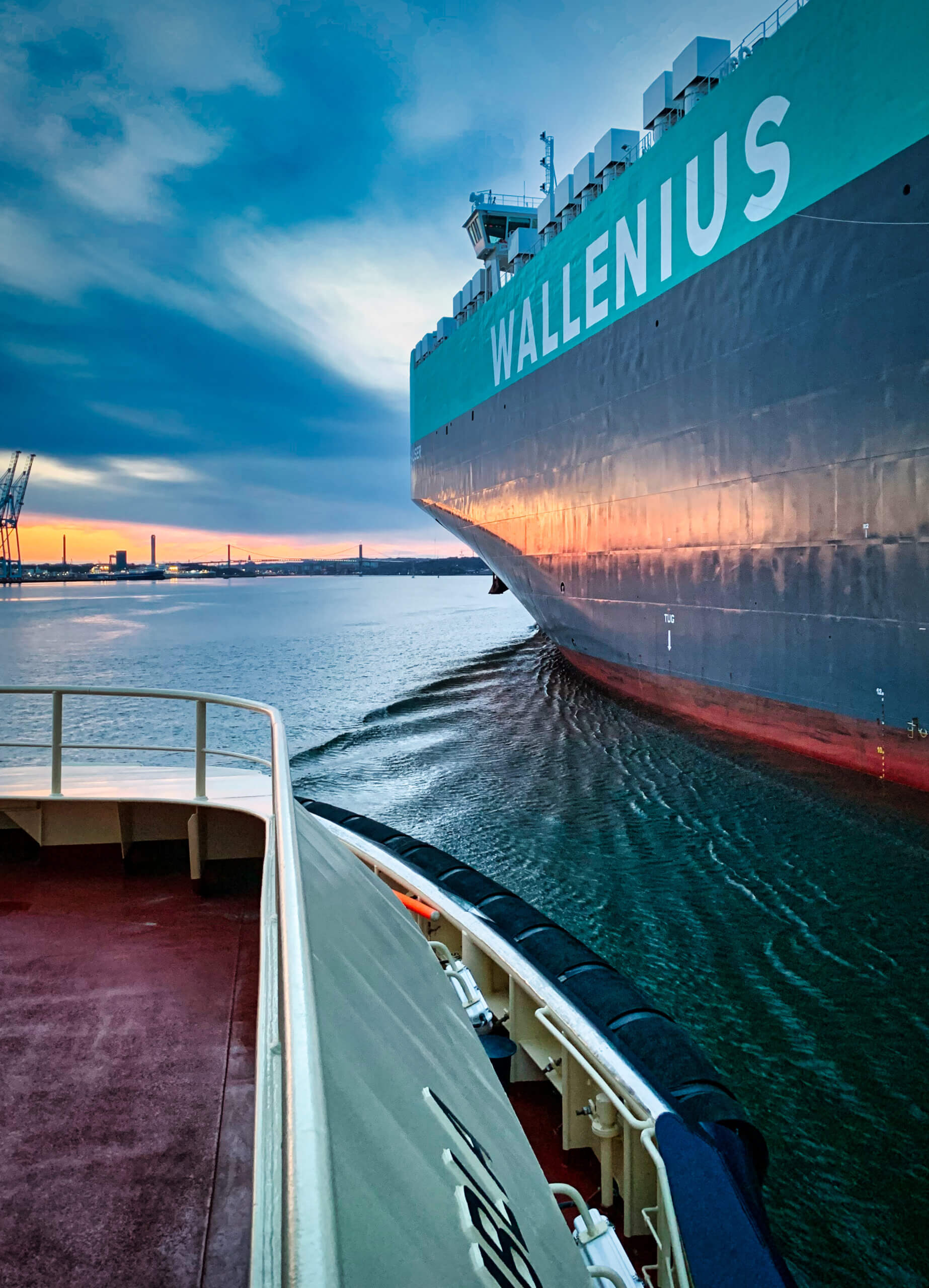
Copenhagen 14 March 2025:Svitzer has signed a global EcoTow agreement with the Wallenius Wilhelmsen group. The agreement marks a major step in Svitzer’s decarbonisation journey and supports Wallenius Wilhelmsen’s ambition to reduce Scope 3 emissions across Svitzer’s global operations.
The agreement covers tug jobs across key markets such as Australia, the UK, and Scandinavia. By applying the mass balance principle, Svitzer can use biofuels across its network and bank the resulting CO₂ savings in its emissions ledger. These are then allocated to Wallenius Wilhelmsen, allowing the company to reduce emissions related to towage.
“This collaboration demonstrates the importance of partnerships in our decarbonisation efforts. Working with a like-minded partner like Svitzer gives us a reliable path to reduce emissions beyond our direct operations,” says Ove Moring, Senior Manager Supplier Contracting & Equipment, Wallenius Wilhelmsen.
Sven Muchardt, Key Customer Manager at Svitzer, highlights the value of the agreement: “We are excited to partner with Wallenius Wilhelmsen on this initiative to help address the shared challenges of decarbonisation. This agreement strengthens our collaboration while supporting both companies’ strategic goals.”
The deal reflects a growing customer demand for voluntary emissions reduction schemes that go beyond regulatory requirements. It also illustrates how Svitzer’s differentiated approach can support customers in accelerating their climate strategies.
“We see EcoTow not only as a solution for today, but as a bridge to more transformative change,” adds Svitzer’s Head of Decarbonisation, Gareth Prowse. “These agreements show that our customers are ready to act now, not later.”
Svitzer Strengthens Organisation Ahead of Intended Listing
Copenhagen, 4 March 2024 - Svitzer strengthens its financial organisation in preparation for the intended demerger and subsequent listing on Nasdaq Copenhagen, following A.P. Møller – Mærsk A/S’ (APMM) decision to initiate the separation of Svitzer.
Christian Lintner has been appointed as Head of Treasury, effective 1 May 2024. He currently serves as the Head of International Treasury at Nets and has previously held a similar position at Torm.
Furthermore, Svitzer has appointed Michael Nass Nielsen as Head of Investor Relations and Financial Planning & Analysis, commencing 1 June 2024. He currently holds the position of Head of Investor Relations at NKT and has previously worked for GN and SEB.
Knud Winkler, CFO of Svitzer, stated, "We are pleased to welcome Christian and Michael to Svitzer. I am convinced that their experience and drive will further strengthen our value creation and future dialogue with investors and financial analysts as we continue to deliver on our strategy."
Svitzer has been part of APMM for almost 45 years. On 8 February 2024, APMM announced its decision to initiate a separation of Svitzer through a demerger, subject to approval at an APMM extraordinary general meeting expected to be held on 26 April 2024, with a subsequent listing of the new parent company, Svitzer Group A/S, on Nasdaq Copenhagen and an anticipated first day of trading on 30 April 2024.
Further details on the demerger and separate listing of Svitzer will be made available on www.maersk.com when the statutory demerger documents have been published, expectedly on 22 March 2024.
A prospectus prepared by Svitzer is expected to be made publicly available prior to the extraordinary general meeting of APMM.
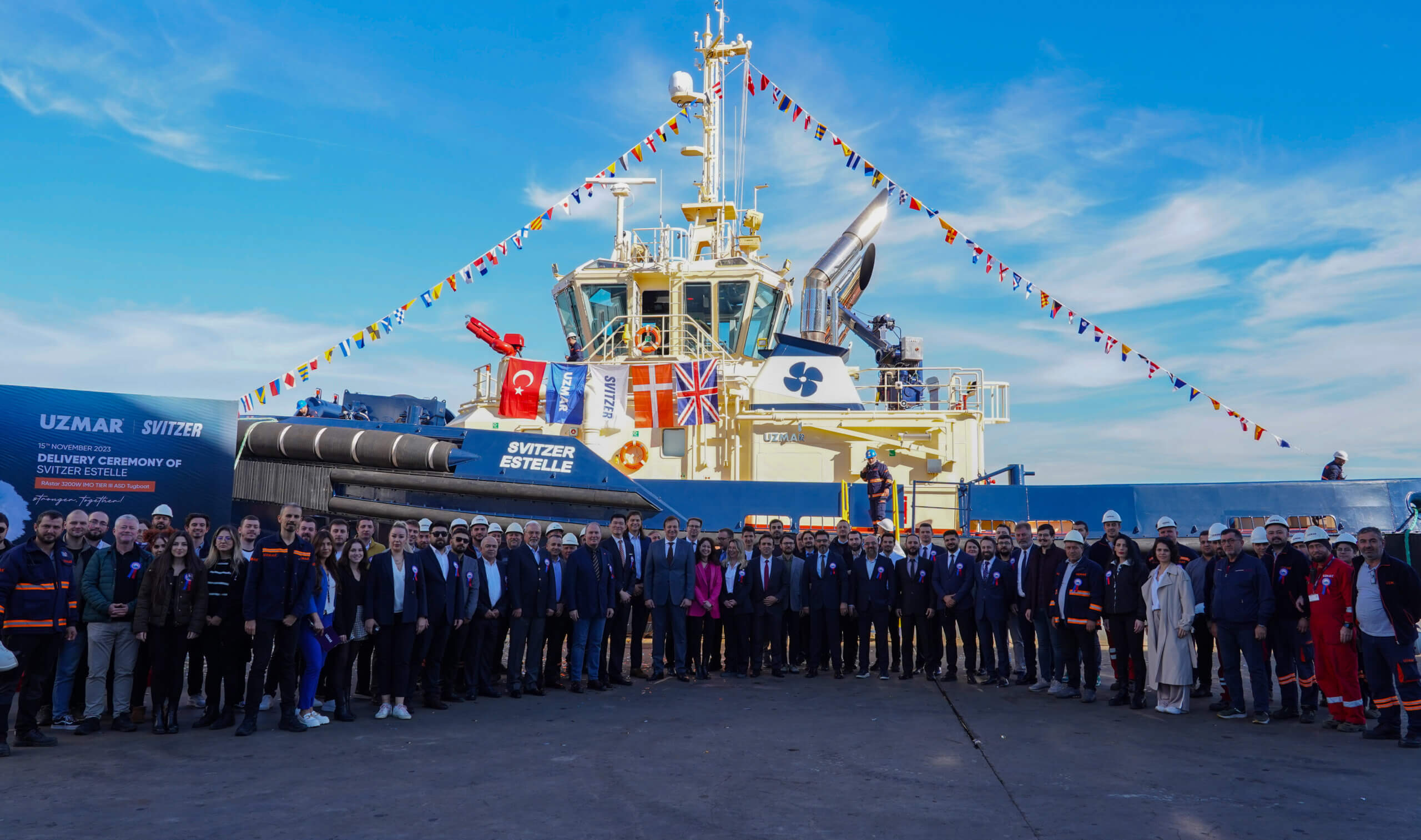
Svitzer Takes Delivery Of ‘Svitzer Estelle’ From Uzmar
Successful delivery of new RAstar 3200W series tugboat by Uzmar Shipyards marked by ceremony ahead of vessel’s deployment in the Port of London
London, 19 December 2023 – Svitzer, a leading global towage provider and part of A.P Moller-Maersk, has announced the successful delivery of Svitzer Estelle, the second tug built as part of the company’s ongoing partnership with Uzmar Shipyards, a world-class tug builder, based in Turkey.
Svitzer Estelle represents another step in Svitzer’s ongoing European fleet modernisation and expansion programme. The newly built, Robert Allan Ltd. designed RAstar 3200W will be deployed by Svitzer on the River Thames and the River Medway, bolstering the company’s operations in the busy Port of London.
The first tug delivered by Uzmar Shipyards in May 2023, Svitzer Elizabeth, is currently in service in the Port of Liverpool. Svitzer’s partnership with Uzmar Shipyards began with the delivery of two tugs for the company’s fleet in Australia. Success over the years has enabled the two businesses to work together to support the safe, efficient, and sustainable delivery of marine towage services.
Svitzer Estelle has a bollard pull of 80 tonnes, and has an L.O.A. of 32 metres, with a beam of 13.2 metres and a depth of 5.5 metres. The RAstar 3200W series tug has a 199m3 fuel capacity and 40m3 freshwater capacity, with Escort Tug and Firefighting1 notation.
The vessel is powered by two Caterpillar 3516E main engines rated at 2525 bkW at 1,800 rpm, with IMO III certified aftertreatment, and has two Kongsberg US255 Z-drives with 2.8m FP propellers.
Speaking on the announcement, Cliff Chow, Svitzer’s London Port Manager, said: “The delivery of the Svitzer Estelle marks a pivotal moment in the continued modernisation of our UK fleet, and will enable us to continue to meet our customers’ demands as well as ensure safe, reliable, and efficient operations. The waters of the Thames and the Medway are dynamic and unique, so we need tugs that can meet and exceed their specific challenges. Just like Svitzer Elizabeth, we are confident that Svitzer Estelle will represent a significant advancement of our capabilities.”
“We’d like to thank the team at Uzmar Shipyards for their ongoing commitment to this partnership and for the completion of another successful project.”
Mr. A. Noyan Altuğ, CEO, Uzmar Shipyards, added: “Today marks not only the delivery of a new tug, but the continuation of our long-term partnership between Uzmar Shipyards and Svitzer. It builds on the success of our delivery of two tugs to Svitzer’s Australian fleet, as well as our ongoing work on Svitzer’s advanced TRAnsverse tug designs. We look forward to continuing our work with Svitzer to make the tugs of the future a reality.”
As Svitzer Estelle is UK-based, the vessel will be able to fall under Svitzer’s EcoTow net-zero carbon harbour towage solution. As part of EcoTow, Svitzer deploys sustainable marine biofuel across its UK fleet to reduce the carbon impact of towage for its customers.
Svitzer Fleet Expands Along Brazilian Coast
Delivery of fourth tug to fleet in Santos, Brazil’s largest port, in 2023 will increase ability for Svitzer to deliver high quality, sustainable marine services at ports on Brazil’s coast.
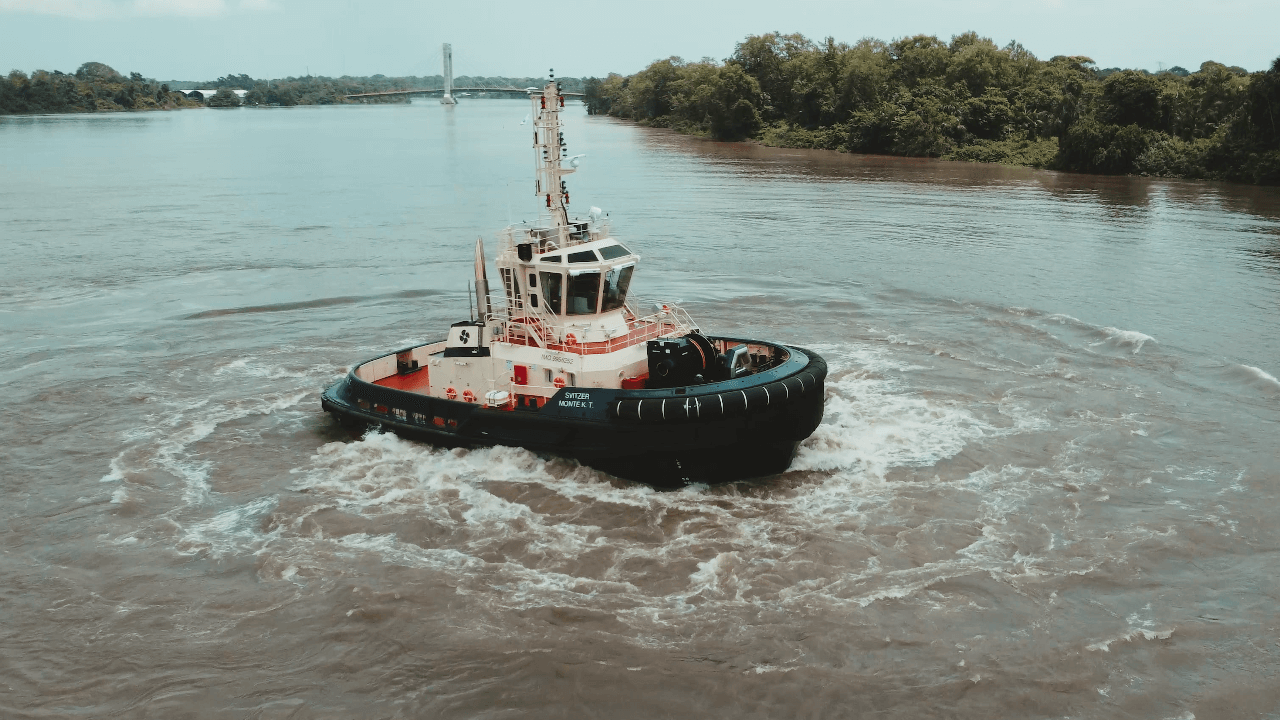
Rio de Janeiro, 25 September 2023: Svitzer, a leading global towage provider and part of A.P. Moller-Maersk, has announced the continued expansion of its fleet in Brazil, as part of the ongoing growth of its operations in the country. Svitzer Monte KT is the fourth tug to join the fleet in the country since April and demonstrates Svitzer’s commitment to strategically strengthening its presence across Brazil’s coast to deliver sustainable marine services.
Svitzer Monte KT is sister to three tugs already delivered to Svitzer in 2023, which have been deployed across the ports of Pécem, Paranagua and Santos on Brazil’s coast. The tug is one of six new Azimuth Stern Drive (ASD) tugs that will be put into operation by Svitzer in Brazil before the end of 2024. As a Ramparts 2300 series tug, Svitzer Monte KT has a top speed of 13 knots and a bollard pull of 70 tonnes. Designed by Robert Allan, the tug was built by the Brazilian Shipyard Rio Maguari.
The new tug joins its sister tug Svitzer Atanásio in Santos, which was delivered earlier in 2023. Svitzer has a total of four tugs in Santos, Brazil’s largest port and Latin America’s busiest container hub.
Arjen Van Dijk, Managing Director Americas, said: “The delivery of the Svitzer Monte KT at Santos shows Svitzer’s commitment to continued growth in Brazil. As we expand our port coverage and increase our ability to deliver sustainable services for customers, we also look forward to further growing our footprint in the country over the next few years. Brazil continues to be one of Svitzer’s main growth markets in the Americas region with two further vessels, equipped with FiFi 1 (firefighting) capabilities to be delivered to Svitzer in Brazil by the second quarter of 2024.”
Commenting on the fleet expansion, Daniel Reedtz Cohen, Managing Director, Svitzer Brazil said: “We have a very clear strategy in the Brazilian market to strengthen our coverage and deliver safe and reliable services to our customers. With the addition of Svitzer Monte KT to our fleet, we continue to strengthen our ability to deliver high-quality support of global and local ship-operators in Brazil’s logistics ecosystem.”
By the end of 2023, Svitzer will be operating 20 tugs, including the four vessels added to the fleet in 2023, from eight ports across Brazil – Salvador, Suape, Pecem, Santos, Vitoria, Rio Grande, Sao Francisco do Sul and Paranagua. As a leading global towage provider, Svitzer combines its wide reach and experience with in-depth regional and local knowledge to benefit its customers in Brazil and ensure they receive services of the highest standard.
Svitzer Appoints Mattias Hellstrom As New Global Chief Commercial Officer
Former Svitzer Europe CCO joins company’s global C-suite
Copenhagen, 20 September 2023: Svitzer, a leading global towage provider and part of A.P. Moller-Maersk, has today announced the appointment of Mattias Hellstrom as its new Global Chief Commercial Officer (CCO), effective from 1 October.
Mattias makes the move to Svitzer’s global business after three years as CCO of Svitzer Europe, and replaces outgoing Global CCO Videlina Georgieva, who was recently appointed Managing Director of Svitzer Australia.
As CCO of Svitzer Europe, Mattias has played a key role in the organisation’s drive to become more customer centric, data driven and focused on quality service delivery.
He will transfer this experience into his new role as Global CCO, and as part of Svitzer’s leadership team continue developing and driving the company’s global commercial strategy.
Prior to his role as CCO of Svitzer Europe, Mattias was Managing Director of Svitzer Scandinavia for nearly seven years. Mattias has also held management roles at Mediterranean Shipping Company (MSC) and A.P. Moller – Maersk. In all, Mattias has more than 25 years of shipping industry experience to draw upon in the role as Global CCO.
Speaking on the appointment, Kasper Nilaus, CEO, Svitzer, said: “I am delighted to be able to appoint a strong internal candidate for the extremely important Global CCO position at Svitzer. With his first-hand experience from Svitzer Europe, Mattias brings a deep knowledge of our business and customers.
“Mattias’ sincere passion for our customers and focus on premium service delivery will be critical to ensuring our ongoing growth and strength in the market. I look very much forward to working more closely with Mattias and seeing him thrive in his new role.”
Mattias Hellstrom, Svitzer’s new Global CCO, added: “I am honoured to take up the position as Svitzer’s Global CCO at such an important time for our business. Building on the foundation laid by my predecessor, I will do my utmost to ensure that we continue to deliver a world-class service. I am excited to be able to work with colleagues from around the world to continue developing our ability to listen deeply to our customers, and use the knowledge gained to meet their current and future marine services needs.” Svitzer has already initiated the process of recruiting a replacement for Mattias Hellstrom in the role as Svitzer Europe CCO.
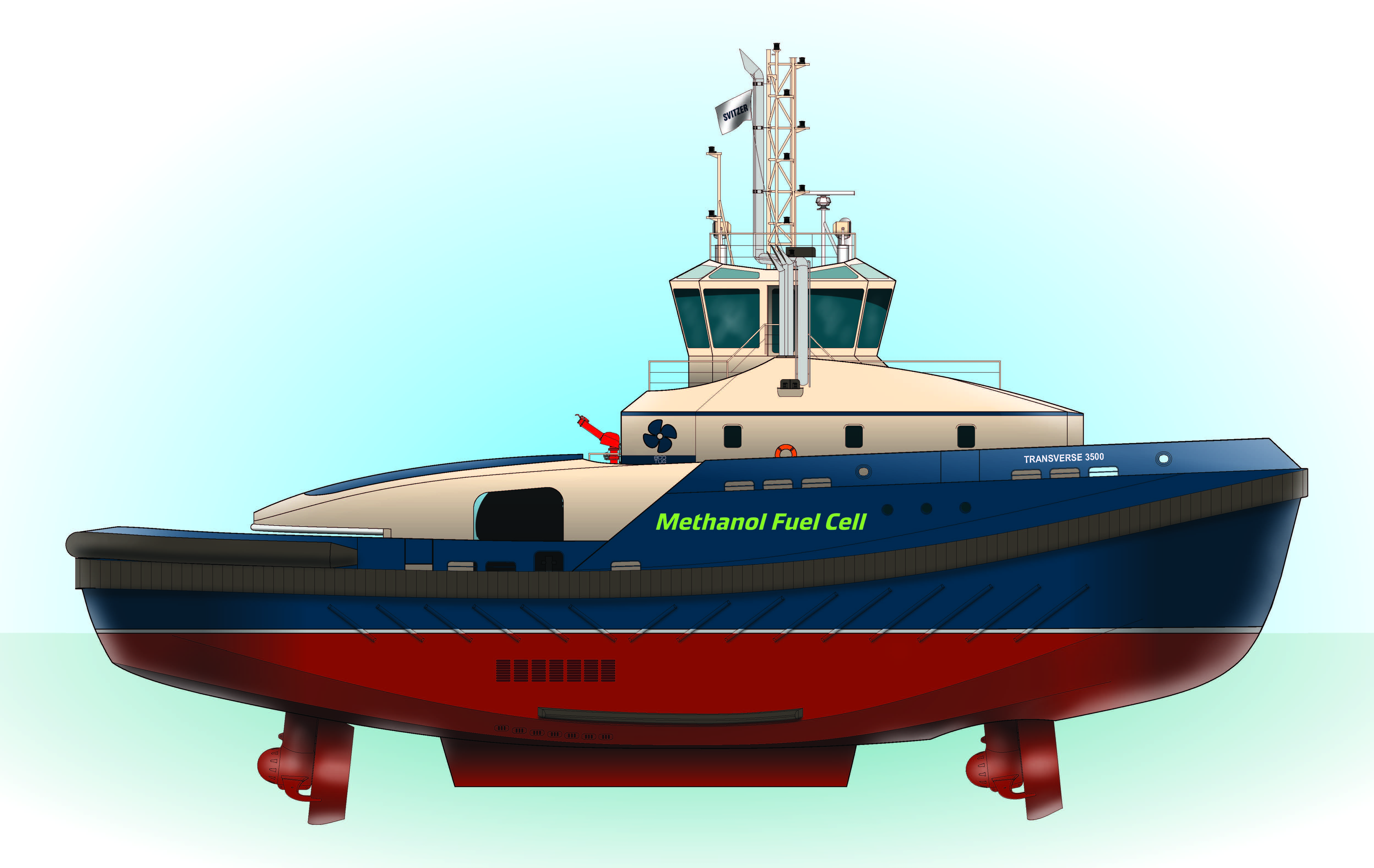
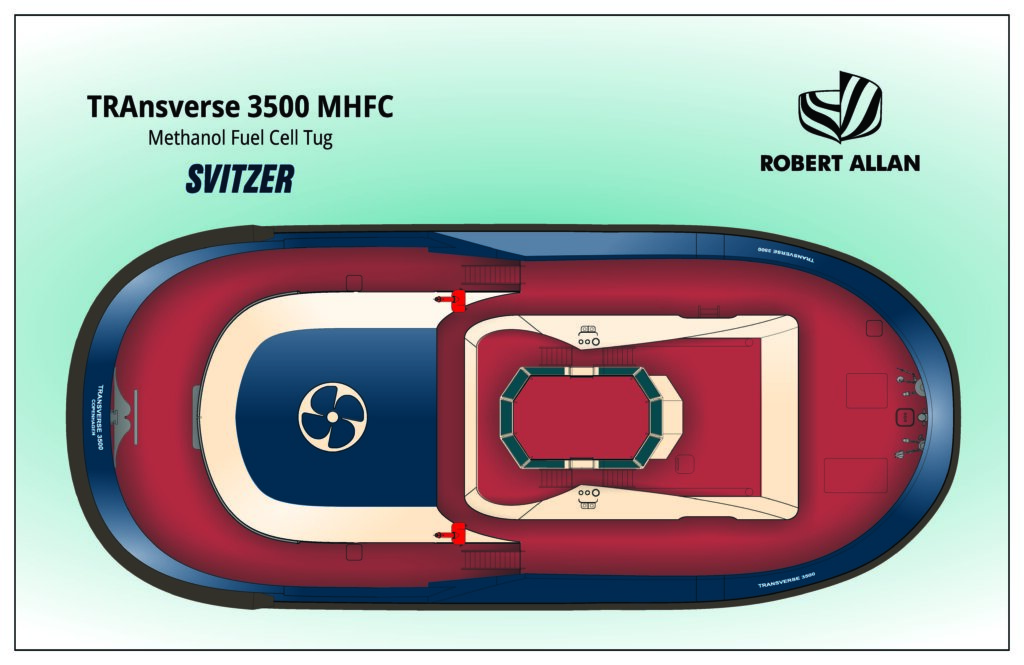
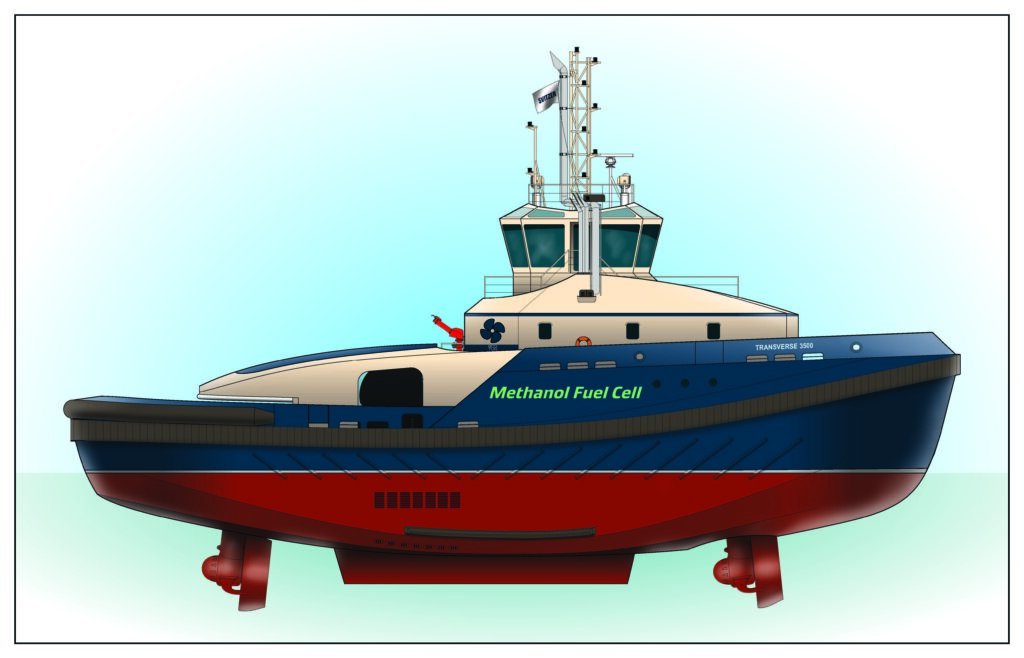
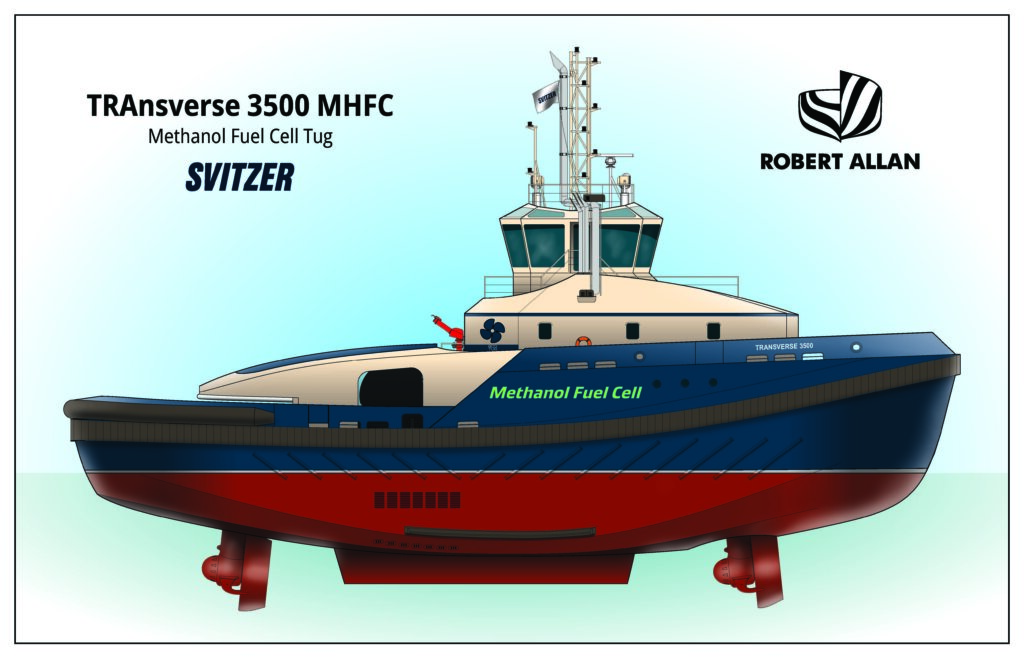
Svitzer Designing World’s First Methanol Hybrid Fuel Cell Tug
Project with Robert Allan Ltd. enters second phase to design the vessel, which represents a key step in Svitzer’s mission to lead the decarbonisation of towage services worldwide.
COPENHAGEN, 17 AUGUST 2023: Svitzer, a leading global towage provider and part of A.P. Moller-Maersk, is today announcing the launch of the second phase of its project to design the world’s first methanol hybrid fuel cell (MHFC) tug.
Svitzer has conducted technical studies to establish the feasibility of this type of vessel accommodating the real-world operational requirements of a tug. Work will now begin between Svitzer and leading naval architect company, Robert Allan Ltd. to design the world’s first methanol hybrid fuel cell (MHFC) tug. The next phase will include work to complete the vessel design, scope considerations for vessel construction, and onboard equipment selection necessary to build the vessel.
The MHFC tug will use an electrical propulsion system with methanol fuel cells and batteries delivering a self-sustained tug with longer endurance and fewer operational constraints than a purely battery-powered vessel. Secondary methanol fuelled generators will provide backup power if required without the need for a secondary fuel. Calculations indicate that the MHFC tug running on green methanol would prevent approximately 1,300 tonnes of CO2 annually from being emitted into the atmosphere, compared to fossil-fuel-based vessels of the same dimensions within Svitzer’s global fleet.
The design of the MHFC tug will be a joint project between Svitzer and Robert Allan Ltd. using Svitzer’s TRAnsverse tug design as the platform. Svitzer will look to forge partnerships with other companies to finalise the selection of onboard equipment, such as the batteries and fuel cell system, and to support construction once the design phase is complete.
Gareth Prowse, Head of Decarbonisation at Svitzer, said: “We’re excited to enter the next phase of delivering the world’s first methanol hybrid fuel cell tug. This project is a major milestone in Svitzer’s commitment to the decarbonisation of our global fleet and demonstrates our ability to harness new technologies and alternative fuels to deliver innovations that will have a significant, positive impact on shipping’s road to net zero.”
“The combination of fuel cell technology and green methanol will result in improved operational efficiencies, resulting in less fuel consumption and lower emissions. We’re delighted to be collaborating with Robert Allan Ltd. to design the MHFC tug and look forward to bringing on new partners to construct the vessel which will operate at the Port of Gothenburg in Sweden.”
Enters operations by 2025 The MHFC is expected to enter operations in the second half of 2025 at the Port of Gothenburg in Sweden, where methanol is the low-carbon alternative fuel of choice.
Göran Eriksson, Port of Gothenburg CEO, said: "The Port of Gothenburg has set ambitious targets to reduce shipping emissions within the port area by 70% by 2030. To deliver on that ambition, the transition of shipping lines from fossil fuels to more sustainable fuels such as green methanol is critically important. Svitzer's decision to design and construct the world's first methanol hybrid fuel cell tug is a major milestone which sets the example for the long-term decarbonisation of global towage services. We're excited to welcome this pioneering new vessel to the Port of Gothenburg when it enters into operation in 2025."
Mathias Jonasson, Managing Director for Scandinavia & Germany at Svitzer, said: “Svitzer has been delivering safe and efficient towage services to customers in the Port of Gothenburg for decades. In addition to its ambitious emission reduction targets, the Port of Gothenburg has already gathered valuable experiences regarding the safe and convenient bunkering of methanol. The port’s experience and position as an emerging methanol bunker hub, combined with our long-standing collaboration and relationship, makes the Port of Gothenburg an obvious location for us to deploy the world’s first methanol hybrid fuel cell tug.”
Jim Hyslop Director, Project Development Principle at Robert Allan Ltd., said: “Robert Allan Ltd. is excited to be working with Svitzer to develop the world’s first Methanol Hybrid Fuel Cell Tug. Based on the award-winning TRAnsverse design, the innovative propulsion system on this new tug will enable operation completely free of fossil fuels. This is a major step forward in the path to decarbonising the tug industry, and we are extremely proud to be at the forefront of developments in these new technologies.”
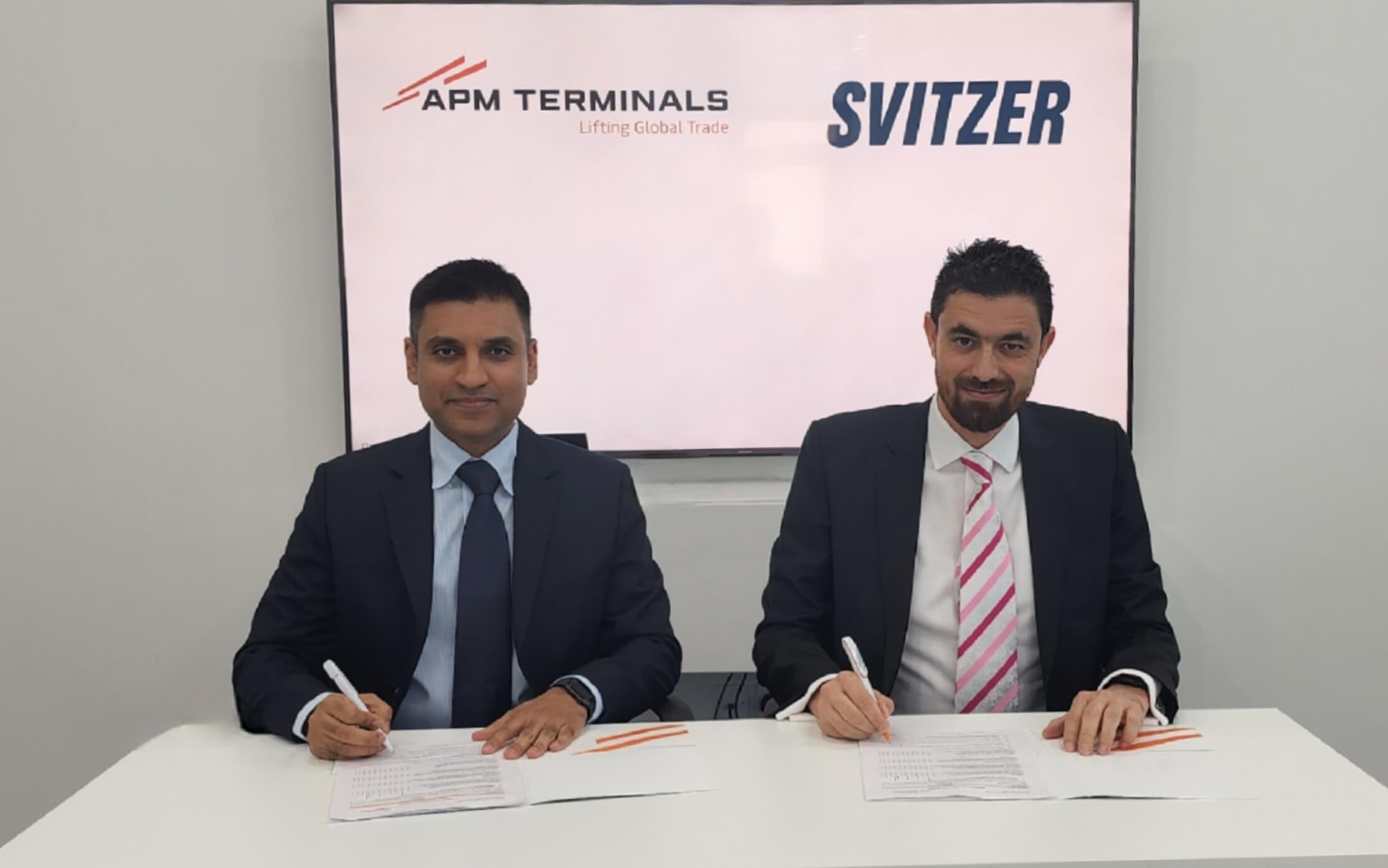
Svitzer Renews Contract with APM Terminals Bahrain for Two Line Boats
COPENHAGEN, 14 July 2023: Svitzer, a leading global towage provider and part of A.P. Moller-Maersk, has renewed its contract with APM Terminals Bahrain for the operation of two line boats that service vessels calling into Bahrain. The new contract runs until December 2027.
The two line boats serve coastal tankers and small vessels, including tugs and barges, providing connectivity and ensuring regional businesses continue to thrive.
"The contract renewal signifies great cooperation between our companies and reinforces the strong relationship we have cultivated over the years. By continuing to join forces, we demonstrate our commitment to delivering excellent services and maintaining the highest standards of safety, efficiency and reliability," says Mohamed Taher Aguir, Managing Director – Bahrain & Liberia.
Svitzer is a leading towage provider in the AMEA (Africa, Middle East & Asia) region operating in 17 ports across 12 countries. Svitzer Bahrain operates in all commercial and industrial terminals in Bahrain with towage, line handling and personnel transfer.
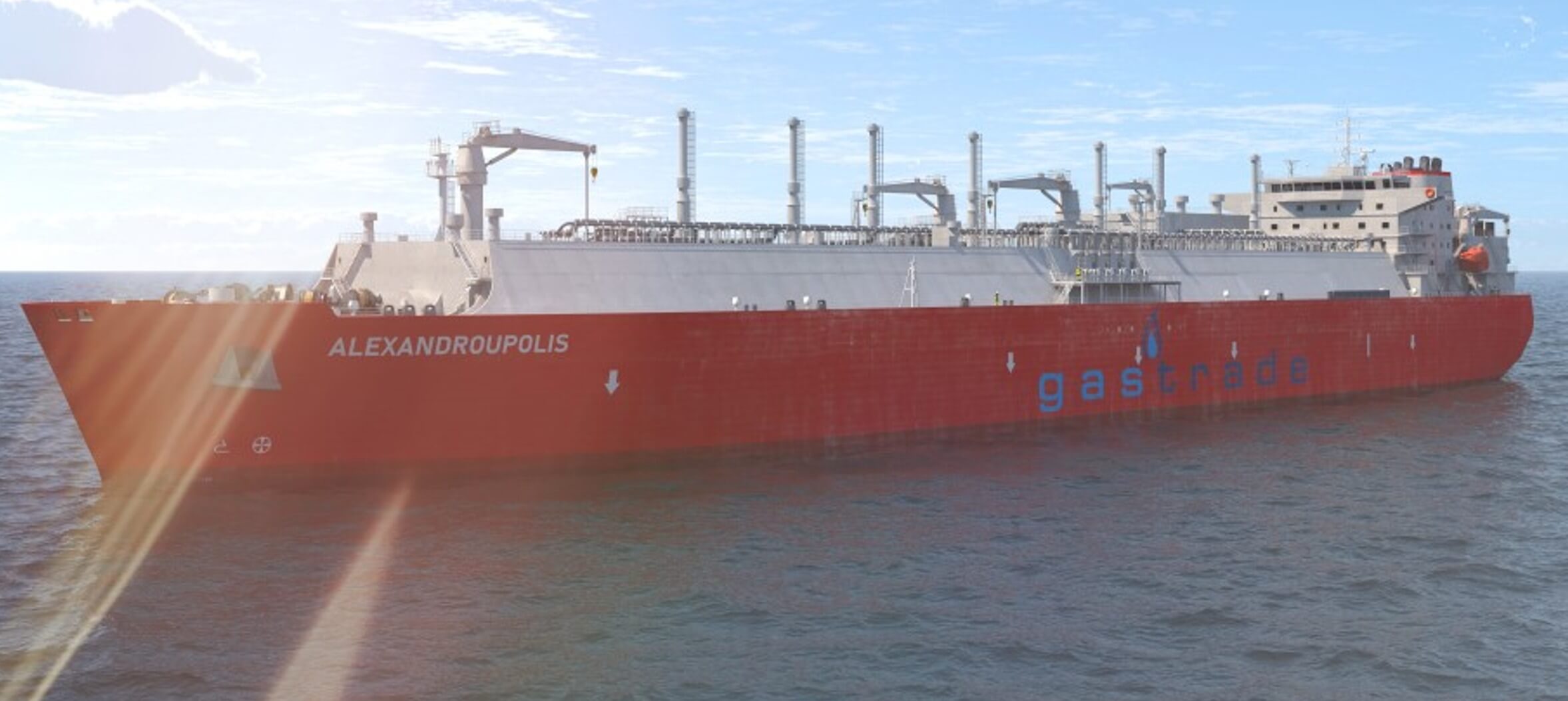
Svitzer Awarded Alexandroupolis LNG Terminal Contract With Gastrade
Project will draw on Svitzer’s extensive expertise in both terminal towage and servicing the global LNG market, assisting Gastrade in enhancing energy security for Greece and the region of South-Eastern Europe
Copenhagen, 13 July 2023: Svitzer, a leading global towage provider and part of A.P. Moller-Maersk, has signed a 15-year agreement to service Gastrade’s Alexandroupolis Independent Natural Gas System (Alexandroupolis INGS) LNG terminal, the first offshore LNG project in Greece. Svitzer will apply its global terminal towage expertise and experience to rapidly set up towage services and support for advanced LNG operations at the new import terminal. This includes supporting a Floating Storage Regasification Unit (FSRU) with a pipeline system connecting the floating unit to the Greek National Natural Gas Transmission System and onwards to final consumers in Greece and the Balkans.
Svitzer will provide four new ASD tugboats, fully manned by Greek crew, to assist the FSRU and the carriers delivering LNG. Svitzer tugboats will provide berthing, un-berthing, navigation assistance, and other terminal services including firefighting, pollution control, pilot and boarding party transfer. Svitzer will also provide support and station keeping services to the FSRU during initial installation.
The project marks Svitzer’s first entry into the Greek market and will see the company apply its knowledge and skills in the local environment. The deal will result in the creation of both onshore and offshore job opportunities based at the terminal in Alexandroupolis. While the Alexandroupolis LNG terminal is set to become operational in the beginning of 2024, Svitzer has already initiated the recruitment process to ensure staff undergo robust training in line with Svitzer’s operational and safety standards ahead of operations commencing. Training will include the use of advanced tug simulators replicating the actual environment around the Alexandroupolis LNG terminal.
Svitzer has more than 25 years of experience as a leading towage provider for customers in the global LNG market, with the Alexandroupolis INGS project further demonstrating Svitzer’s stronghold as expert service provider to the energy industry.
Commenting on the agreement, Lise Demant, Managing Director, Svitzer Europe, said: “We are delighted that Gastrade has chosen us as its trusted partner to deliver towage services for the Alexandroupolis INGS LNG terminal. The long-term agreement will allow Svitzer to grow within its core business, expand geographically and deliver safe and efficient marine services to a new customer. This includes providing a truly customised solution for Gastrade, with the delivery of four brand new tugs. We look forward to being part of the first offshore LNG project in Greece and to welcome new Greek colleagues to Svitzer, who will help deliver reliable and high-quality towage service to Gastrade and its customers.”
Konstantinos Sifnaios, Managing Director at Gastrade, added: “High-quality towage and marine services will be critical to the success of the Alexandroupolis LNG Terminal project. We are convinced that Svitzer is the right partner to deliver this, thanks to its extensive track record in terminal towage, its agile fleet management, and solid experience from servicing many other LNG customers globally. We look forward to working together with Svitzer to build jobs in the local market and ensure energy security for the region and beyond.”
Svitzer and South Hook enter EcoTow agreement to reduce tug fleet emissions
Long-term contract agreed to fuel vessels with low-carbon hydrotreated vegetable oil (HVO), cutting CO2 emissions
LONDON, 6 JULY 2023: Svitzer, a leading global towage provider and part of A.P. Moller-Maersk, has today announced an EcoTow agreement to fuel a fleet of five tugs dedicated to the South Hook LNG Terminal in Milford Haven, with hydrotreated vegetable oil (HVO), a low-carbon fuel. The switch from fuelling tugs with marine gas oil (MGO) to HVO will reduce CO2 emissions, whilst maintaining a safe and reliable service for South Hook LNG and its customers.
The long-term deal, which requires no modifications to equipment or engines, will see a significant reduction in CO2 emissions from the five tugs servicing the LNG discharging at South Hook.
South Hook LNG Terminal is the first terminal at the Port of Milford Haven to switch its towage contract to low-carbon fuels, taking advantage of Svitzer's EcoTow solution.
Commenting on the long-term agreement with South Hook, Mattias Hellstrom, European Chief Commercial Officer, Svitzer Europe, said: "We are committed to providing sustainable marine services, and delighted to be working with a partner like South Hook LNG Terminal to deliver a more sustainable fleet of towage vessels in Milford Haven. We look forward to continuing working with South Hook to operate vessels that benefit the local port environment through reduced particulate emissions. Running these vessels on HVO also means Svitzer is able to continue cutting carbon emissions across its UK operations."
In 2022, the switch from MGO to HVO in Svitzer's UK fleet prevented more than 21,000 tonnes of CO2 from being emitted into the atmosphere. With the HVO conversion of the fleet dedicated to the service of South Hook LNG, there are only a few tugs left to be converted to complete the conversion of Svitzer's entire UK fleet to low-carbon fuels.
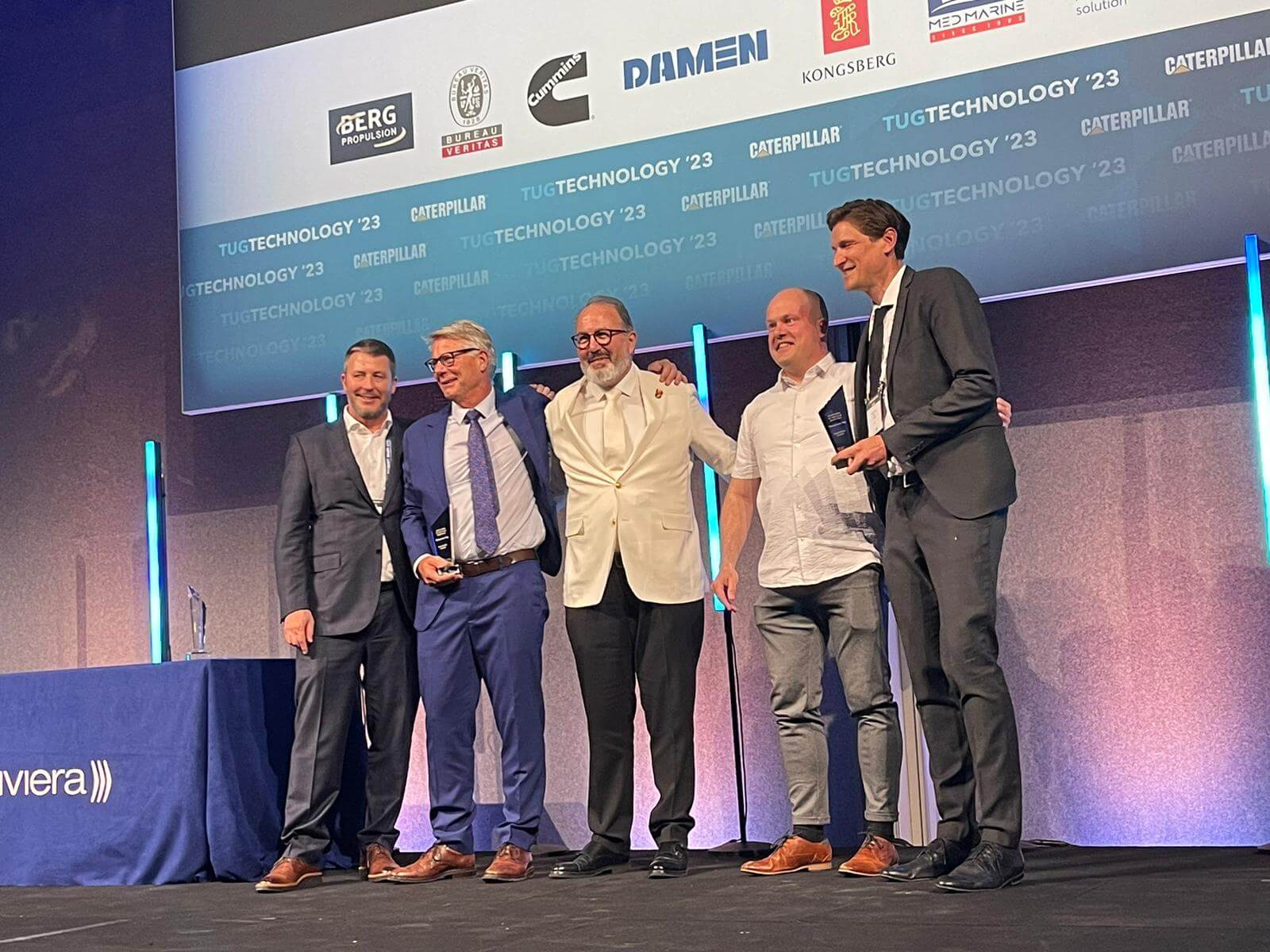
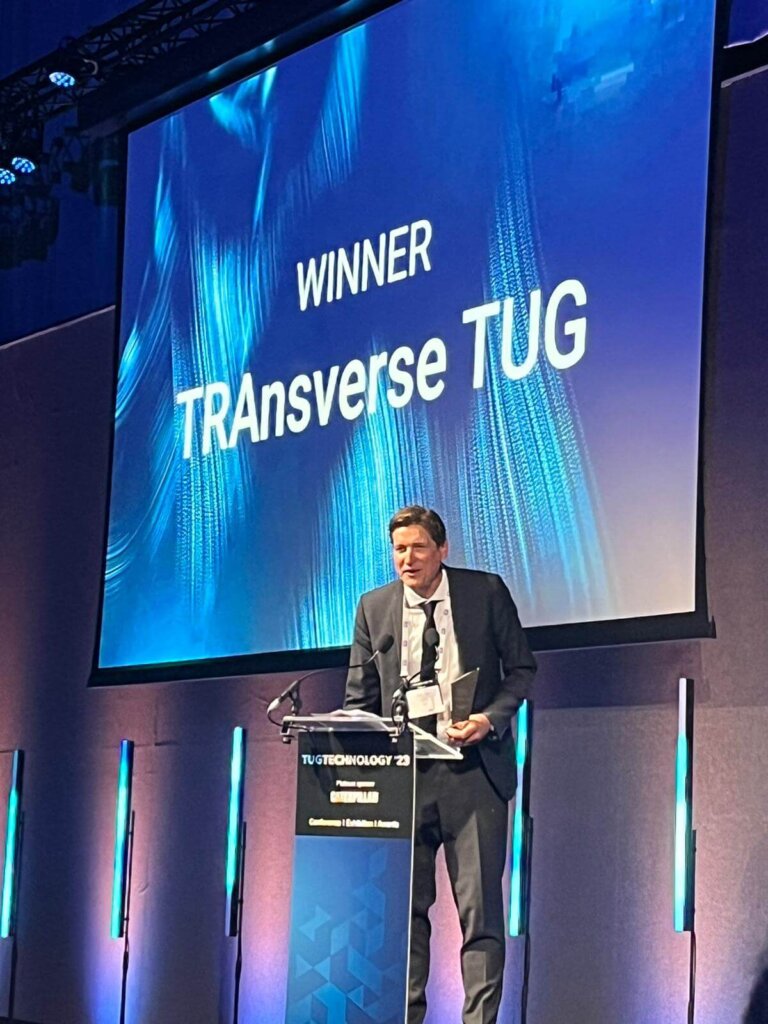
Svitzer wins Innovation of the Year Award
At the 2023 International Tug & Salvage Awards, which took place at the biennial TUGTECHNOLOGY conference held in Rotterdam this year, Svitzer was awarded Innovation of the Year in recognition of the TRAnsverse Tug.
Kasper Karlsen, Chief Operating Officer, accepts the Innovation of the Year Award.
The Innovation of the Year award recognises outstanding and innovative designs, projects, or vessel operations that have set new benchmarks in the tug industry over the last 12 months.
Svitzer worked with Robert Allan Ltd to design the next-generation multipurpose tug with leading manoeuvring and escort capabilities supporting all types of harbour and terminal towage operations, while reducing fuel consumption. It has an omnidirectional hull form and propulsion system enabling safe, swift and seamless transition between direct and indirect towing modes.
Congratulations to all of the winners at the 2023 Intl. Tug & Salvage Awards!
New TRAnsverse Tugs for Svitzer Australia
Contract signed with Uzmar to deliver new, state-of-the-art, TRAnsverse tugs with superior operating capability and fuel efficiency, following design collaboration between Robert Allan and Svitzer.
Copenhagen/Sydney, 15 May 2023: Svitzer, a leading global towage provider and part of A.P. Moller-Maersk, has today announced it has awarded a contract to Uzmar Shipyard to build two new TRAnsverse tugs for its Australian business.
The TRAnsverse tugs are a revolutionary tug design, created in collaboration with Robert Allan Ltd, which set a new standard in tug efficiency, power and manoeuvrability, and deliver an estimated 10-15% reduction in fuel use compared to other tugs on the market. The new tugs will be built to a specification that also enables biofuel operations bringing tank-to-wake carbon emissions to zero.
The TRAnsverse tug’s omnidirectional hull form, in combination with its unique towing staple and propulsion system, provides towage capabilities that are unmatched by other tug designs. Its design enables it to maximise the forces necessary for braking and steerage during towage, as it manoeuvres steadily in the water, and consequently without compromising safety, even at full speed range. It maintains position with lower propeller input power than tug designs where the thrusters are mounted side by side, and overall brings a significant increase in stability and freedom of movement.
As a result of these features, the TRAnsverse tug meets the full range of complex harbour and terminal towage environments, providing benefits such as the ability to reduce overall time of tug jobs, greater availability in poor weather conditions, reduced emissions and enhanced safety.
The two new tugs will be deployed to Svitzer Australia’s Port of Newcastle (NSW) operations in 2025 becoming the first TRAnsverse tugs to be deployed to Australia, and only the second and third to be deployed globally. The Port of Newcastle is a busy, diverse port operation with a complex harbour, tidal restrictions and channel environment requiring active escort towage, and direct and indirect towage capabilities. Newcastle sees a range of vessels calling from capsize vessels carrying coal, to bulk, container and cruise ships. The complexity of Newcastle’s towage operations and range of vessels that call on the port will showcase the full range of the TRAnsverse tug’s capabilities.
Svitzer CEO Kasper Friis Nilaus commented: “We have been listening closely to our customers and their need for innovative towage solutions. The TRAnsverse tug offers significant improvements in operational efficiency, flexibility and sustainability by improving shipping turnaround times and reducing carbon emissions, helping customers to manage the demands of the modern towage market and the complex, busy port environments of today and the future.”
“The scale of Svitzer’s operations, collaboration with customers and deep understanding of port operations globally enables us to design and invest in the best possible towage solutions. We are committed to building new tugs that meet the highest of efficiency standards and that support our customers and port operations in reducing their scope 3 emissions and total carbon footprint, whilst not compromising – and indeed improving - on safety and operational performance.”
Svitzer selected as towage provider at Fawley Refinery
Operated by ExxonMobil, the Fawley Refinery will strengthen Svitzer’s presence in the UK market
Copenhagen, 26 April 2023: Svitzer, a leading global towage provider and part of A.P. Moller-Maersk, has today announced that it has secured a 7-year contract with ExxonMobil to provide towage services at Fawley Refinery. This contract reinforces Svitzer’s position in the UK and will increase synergies with the port of Southampton.
The contract was awarded after an open-tender process, in which Svitzer demonstrated its ability to utilise assets across Fawley and Southampton to provide a more efficient solution for ExxonMobil. Svitzer already owns the three tugs operating at Fawley Refinery and the intention is to continue operating them with existing personnel, with the crews being offered to continue in their current roles, but as Svitzer employees.
The contract includes the provision of line handling as well as operation of three launch boats and two mooring pontoons. Two shore-based staff will spend the majority of their time servicing the Fawley operation, ensuring that ExxonMobil has a face-to-face contact readily available, and that crew have a support network for ensuring compliance, maintenance, storing and day-to-day operations run smoothly.
The Fawley deal furthers Svitzer’s long-standing position as a leading towage provider in the UK, including a harbour towage operation in nearby Southampton, which has been servicing a wide range of customers for more than 15 years. In addition to the tugs operating at Fawley, Svitzer currently operates five tugs in nearby Southampton.
Commenting on the announcement, Lise Demant, Managing Director, Svitzer Europe, said “We are very proud to have been selected as the provider for towage services at the Fawley Refinery, and excited to provide our high-quality towage services to ExxonMobil. This contract is a great win for all of us at Svitzer. It enables us to grow our position in the UK, while driving synergies with our existing harbour towage operations at the port of Southampton, and welcoming new, skilled colleagues into the Svitzer family.”
Svitzer and Caterpillar Sign MOU to Implement Methanol Dual Fuel Solutions to Power Svitzer Newbuilds and Convert Existing Tugs
Svitzer and Caterpillar Marine Sign a Memorandum of Understanding (MOU) to Support Svitzer’s Decarbonization Strategy by Addressing Methanol As a Fuel in Newbuilds and Conversion of Existing Tugs.
Svitzer, a leading global marine operations and towage operator, have together with Caterpillar Marine signed a Memorandum of Understanding (MOU) to adopt solutions that enable Svitzer to utilize methanol in their fleet. The implementation of dual-fuel methanol engines focuses on new tugs as well as conversions of existing Cat® powered tugs, which comprise the majority of Svitzer’s fleet. With a relationship spanning numerous decades, this agreement marks the next evolution of their journey to, amongst other initiatives such as the adoption of biofuels in EcoTow, enable the fulfilment of Svitzer’s decarbonization strategy.
Following the recent Cat 3500-E series methanol-readiness announcement in September 2022, this MOU formalizes the collaboration to deploy engine technologies that enable Svitzer to utilize methanol, which can be produced from renewable energy sources to reduce lifecycle greenhouse gas emissions. “Svitzer has a significant fleet of vessels powered by Cat systems, as well as ambitious decarbonization targets for our future fleet. It is therefore of utmost importance that we join forces with strategic collaborators, such as Caterpillar Marine, to find solutions for both existing and future vessels.” said Kasper Karlsen, global chief operating officer of Svitzer. With a focused strategy on sustainability, Svitzer is making pragmatic decisions to support reductions in carbon intensity in the maritime industry, aiming to achieve a 50% reduction in the CO2 intensity of its entire fleet by 2030 and become CO2 neutral across all scopes by 2040.
“Many companies within the industry are exploring methods and solutions that can be incorporated today while also determining viable options for the future. The collaboration between Caterpillar and Svitzer is an important step towards implementing the solutions that support their decarbonization strategy,” said Brad Johnson, Caterpillar Marine vice president and general manager of marine.
“Given the size and complexity of our fleet and the ambitious target we have set of becoming carbon neutral in 2040, it is critical to take a holistic approach to reducing our CO2 emissions. While we seek to mature and utilize new technologies, fuel types and operational approaches for new vessels, we also have to find solutions that help reduce the emissions from our existing fleet. The support Caterpillar provides in finding ways of converting our equipment to methanol usage plays a key role in this” says Gareth Prowse, head of decarbonization for Svitzer.
“The focus of our collaboration is two-fold. We are supporting Svitzer to enable tugs to operate on methanol with diesel-like performance while providing fuel flexibility which is key to enabling operators to lower their carbon intensity via green methanol as availability increases. Additionally, we’re taking full advantage of the learnings to provide conversion solutions for the existing fleet. This is a critical aspect to reach the level of methanol adoption that Svitzer seeks to fulfill their goals” said Andres Perez, global tug segment manager, Caterpillar Marine.
Svitzer solidifies Brazilian market presence with entry into Port of Salvador
Rio de Janeiro, 27 February 2023: Svitzer, a leading global towage provider and part of A.P. Moller-Maersk, has today announced that it has expanded its presence in Brazil to provide operations and services at the Port of Salvador, including Aratu Port Complexes. The new port location adds to Svitzer’s reach and ability to deliver high-quality towage services to its customers in the region.
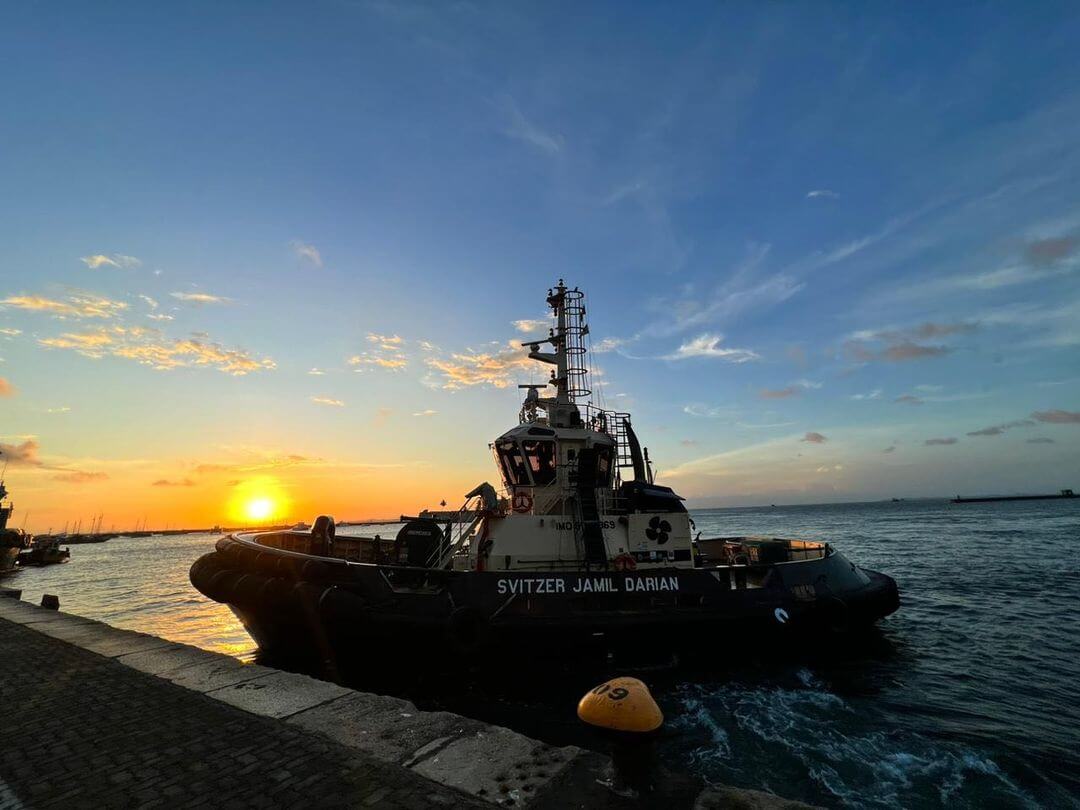
Svitzer will deploy two modern and high-powered tugs, the Svitzer Jamil Darian and Svitzer Zoe, in the Port of Salvador to attend to its diverse portfolio of customers in the region. Svitzer’s two modern tugs will bring new possibilities for more complex manoeuvres and assistance of different ship sizes at the Port of Salvador.
To service the port, Svitzer has hired a total of 12 crew members, creating jobs for those living in the local region. The crews have undergone substantial training in line with Svitzer’s international standards and will operate with an uncompromising focus on safety.
Commenting on starting operations in Salvador, Daniel Reedtz Cohen, Managing Director of Svitzer Brazil, said: “I am very pleased to announce our expansion into the Port of Salvador and Aratu Port Complexes, which marks another important milestone in our Brazil growth strategy. Brazil continues to grow in its role as a key player in the global trade ecosystem, with resulting increased port activity. Svitzer is dedicated to its role in the supply chain and to servicing customers in the region. With this latest entry into Salvador, we strengthen our coverage on the Brazilian coast and presence in the country.”
As part of its general expansion in Brazil and to support continued organic growth, Svitzer has announced a new build programme consisting of six new tugs, the first of which was delivered and put into operation in the Port of Pecem earlier this month. With the new build programme, Svitzer aims to continue to expand its coverage on the Brazilian coast in the years to come.
Svitzer has been operating in Brazil since 2015 and now has a presence across eight ports in the country. As a leading global towage provider, Svitzer brings high safety standards as well as global reach, experience and financial resilience to the table along with in-depth regional and local knowledge. This is all to the benefit of Svitzer’s customers, many of whom are multinational and appreciate a homogenous towage service of the highest quality, regardless of port or country.